On My Way Back to the Old Bill Monroe Homeplace

I’m On My Way Back To The Old Home

Lyrics by Bill Monroe (1950)
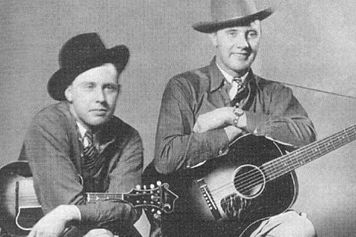
Bill Monroe (left) with brother, Charlie, 1936 (Public Domain).

Back in the days of my childhood
In the evening when everything was still
I used to sit and listen to the foxhounds
With my dad in the old Kentucky hills

I’m on my way back to the old home
The road winds on up the hill
But there’s no light in the window
That shined long ago where I live

Soon my childhood days were over
I had to leave my old home
For dad and mother were called to heaven
I’s left in this world all alone

Plaque honoring Bill Monroe on the Rosine Barn Jamboree, Rosine, KY. (Photo by Bob Bell/Driving Backroads).

High in the hills of old Kentucky
Stands the fondest spot in my memory
I’m on my way back to the old home
The light in the window I long to see

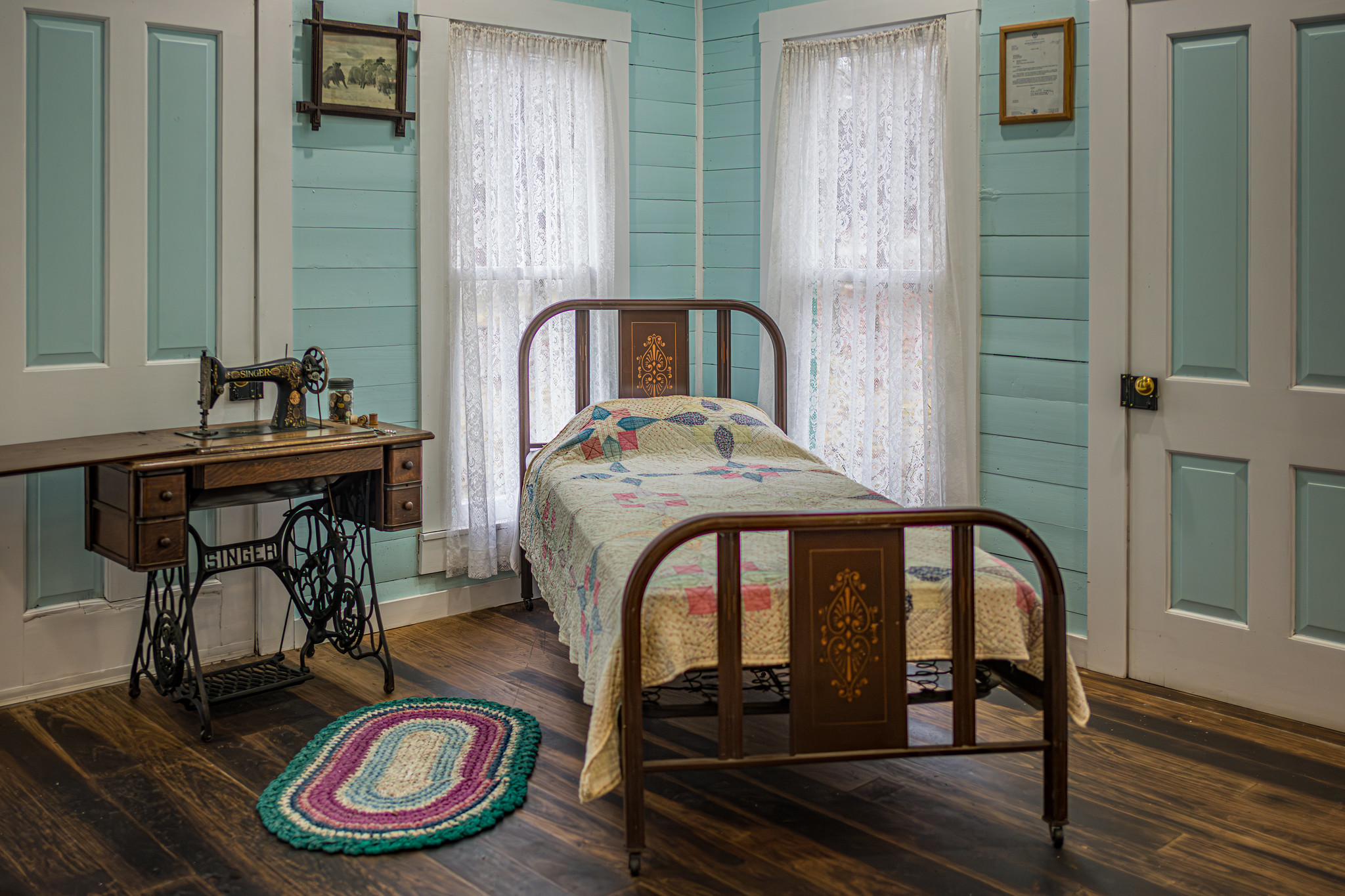
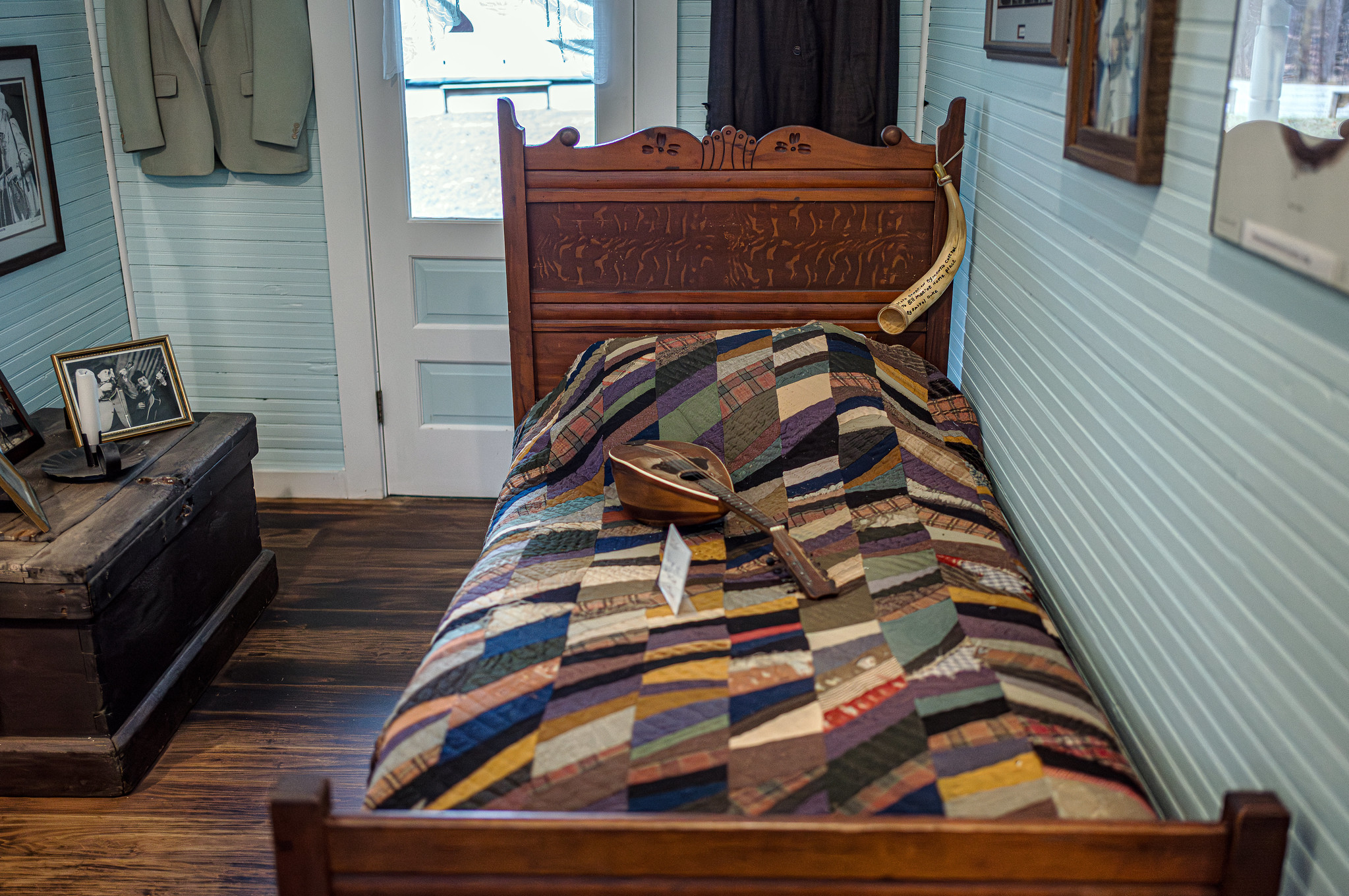
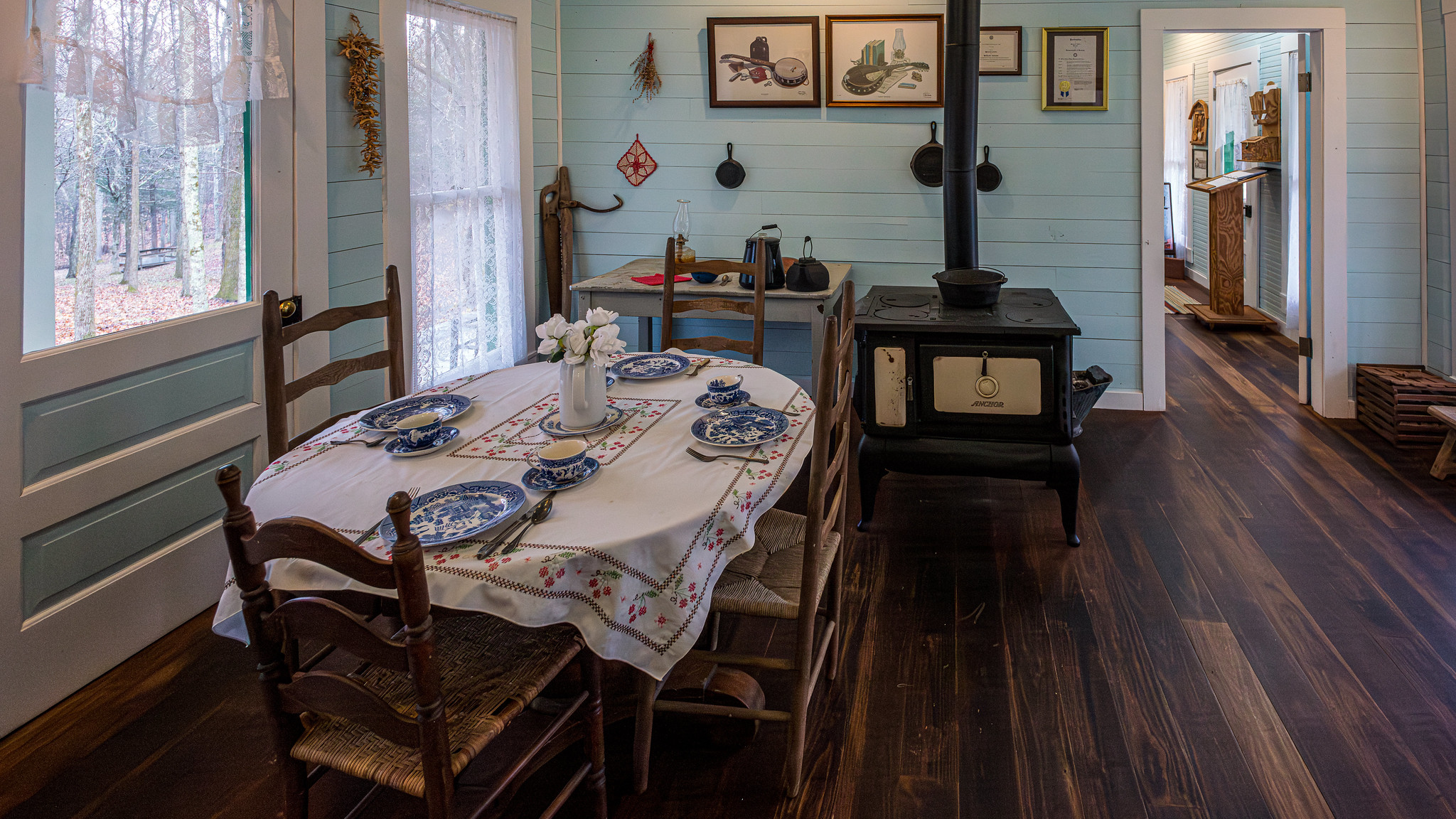
It was a cold, rainy January day and I hoped the rain would subside long enough for me to take a few pictures of the Bill Monroe Homeplace on Jerusalem Ridge, just outside of Rosine, Ohio County, Kentucky. I was meeting with Marty Hays, whose wife, Robin, is the official caretaker of the Homeplace. They work together to keep the property in top shape for visitors and activities on the property, including concerts and events, and help keep the history and heritage of Bill Monroe and his family alive.
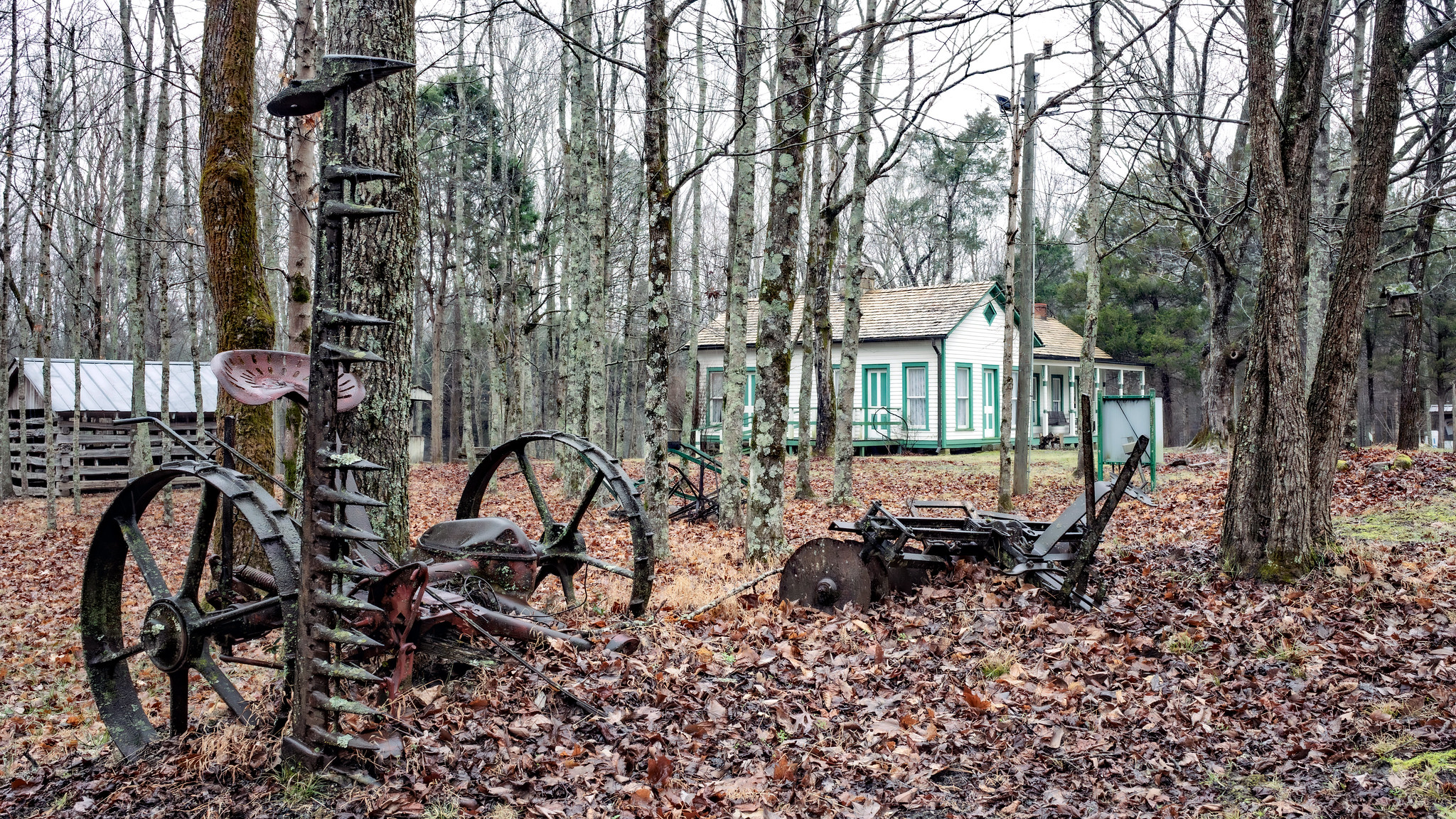
Old farm equipment on the Bill Monroe Homeplace (Photo by Bob Bell/Driving Backroads).

Marty, a musician himself, showed me through the house, and afterward, we sat down and talked about Bill Monroe, his early life and family, his rise to fame, and the area’s musical heritage. I learned that Bill was born in a log cabin on the property in 1911. It burned when he was five, and the current house was built a short time later. It’s been called “the most musical home in America.”
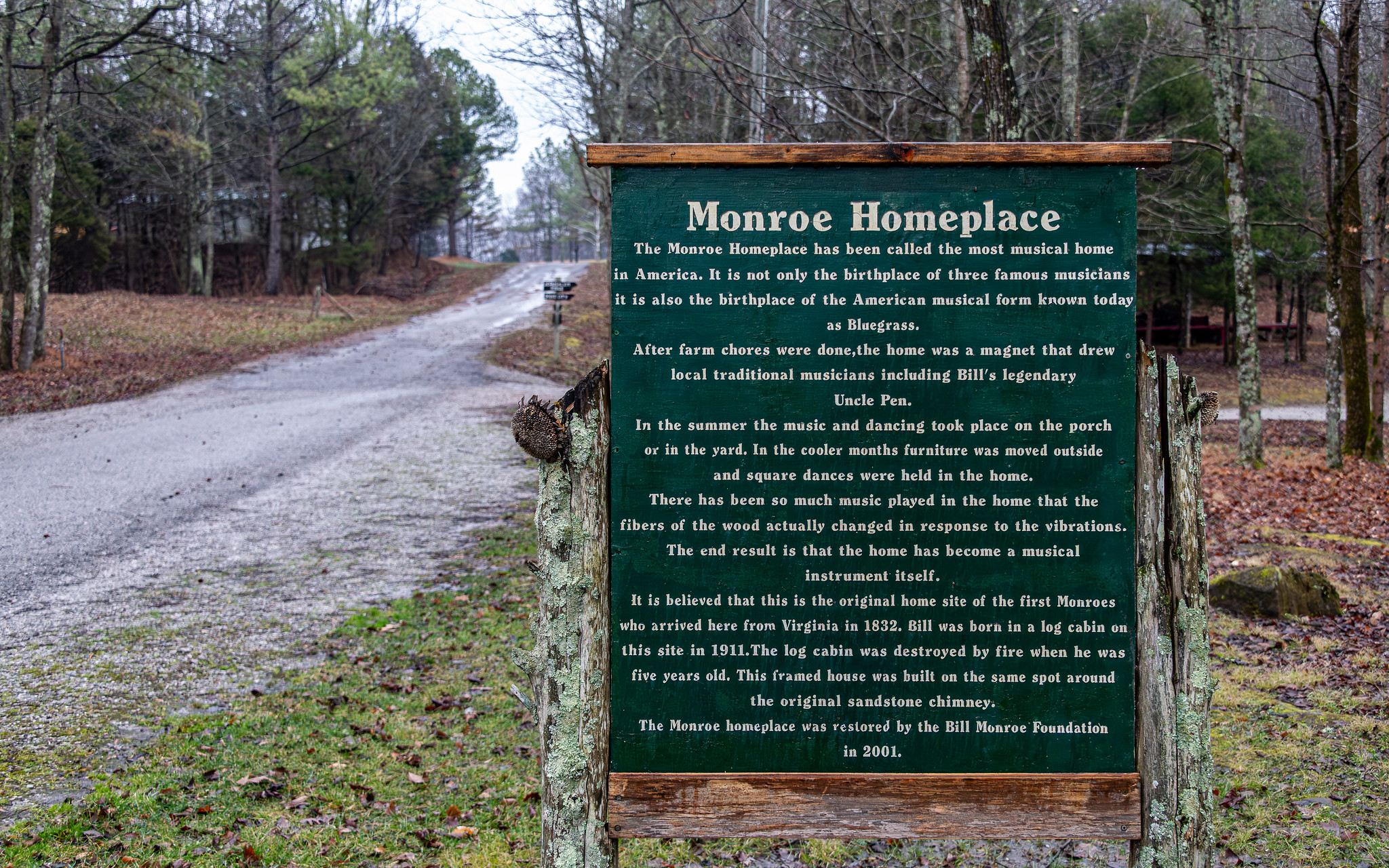
A sign in front of the Monroe Home explains the Monroe musical heritage. (photo by Bob Bell/Driving backroads).

Not only was the house the home to Bill Monroe, but also his two musician brothers, Charlie and Birch. A sign on the property informs us that “After the farm Chores were done, the home was a magnet that drew local traditional musicians including Bill’s legendary Uncle Pen. In the summer the music and dancing took place on the porch or in the yard. In the cooler months furniture was moved outside and square dances were held in the home.”

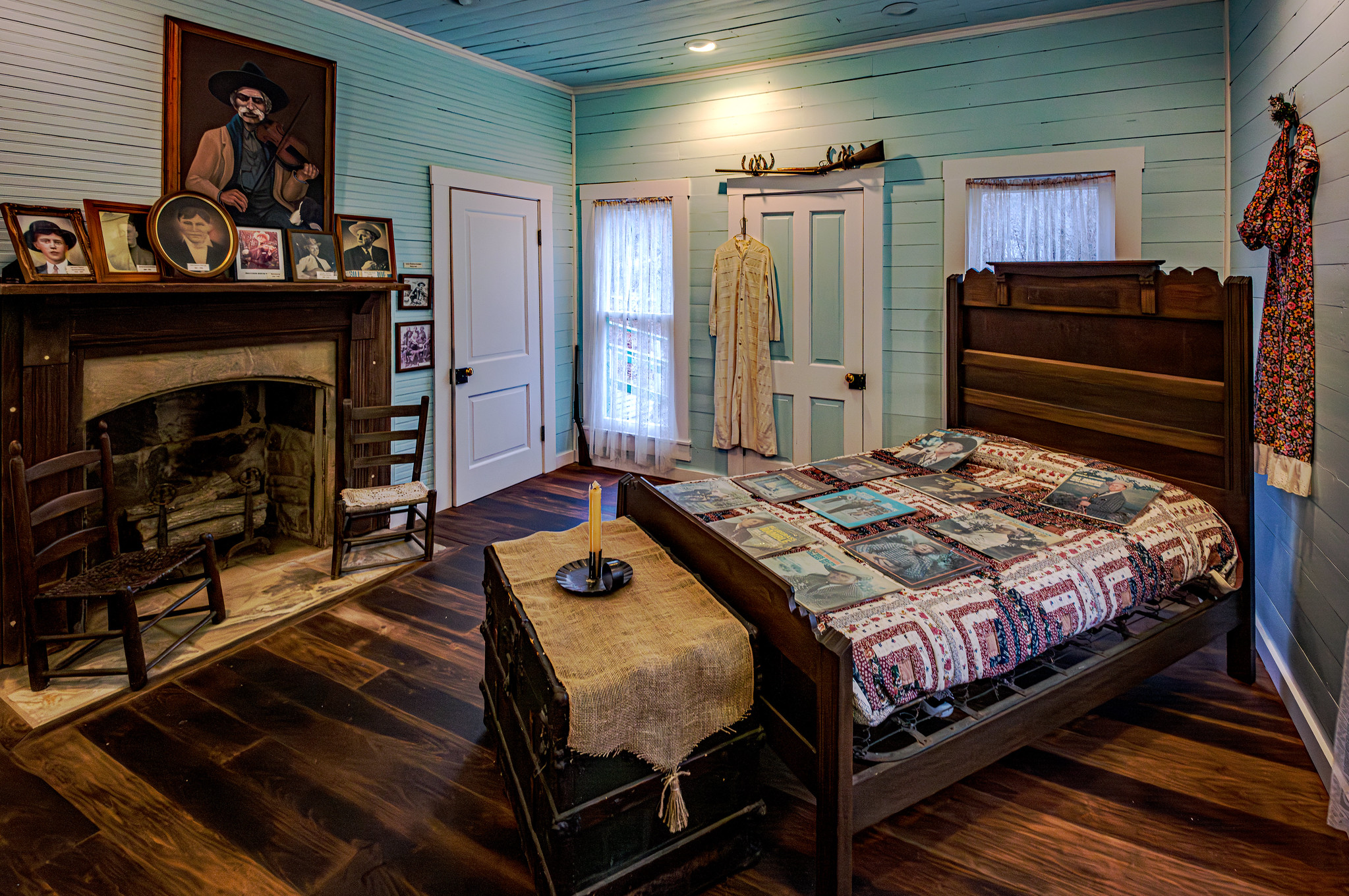
Portrait of Bill Monroe playing his mandolin by Rosine native Malissa Beatty hangs above a fireplace in the homeplace. (Photo by Bob Bell/Driving Backroads).

Bill, the youngest of eight children, who in his youth would play music with his brothers Charlie and Birch, got to play the mandolin, as the older brothers already had dibs on the guitar and fiddle. It became his trademark instrument, and as he rose in the ranks of country music, he defined his style by playing the mandolin as lead instrument. Major influences for Monroe were his mother, Malissa, who played the fiddle and sang, and her brother, Pendleton “Uncle Pen” Vandiver. His mother died in 1921 and following the death of his father in 1928, Bill moved in with his Uncle Pen, as his siblings had already moved from the homeplace. Bill would often accompany his Uncle Pen who was a well-known fiddle player in the area, to dances and events where he got a chance to play and learn from the older man. In 1950, Monroe recorded the song “Uncle Pen,” as a tribute to his uncle. Over they years, it has been recorded by other country artists, including Porter Wagoner (1956) and Ricky Scaggs (1984), among others.

Portrait of Uncle Penn by Kentucky artist Malissa Beatty above a fireplace in Bill’s parents’ bedroom in the homeplace. (Photo by Bob Bell/Driving Backroads)
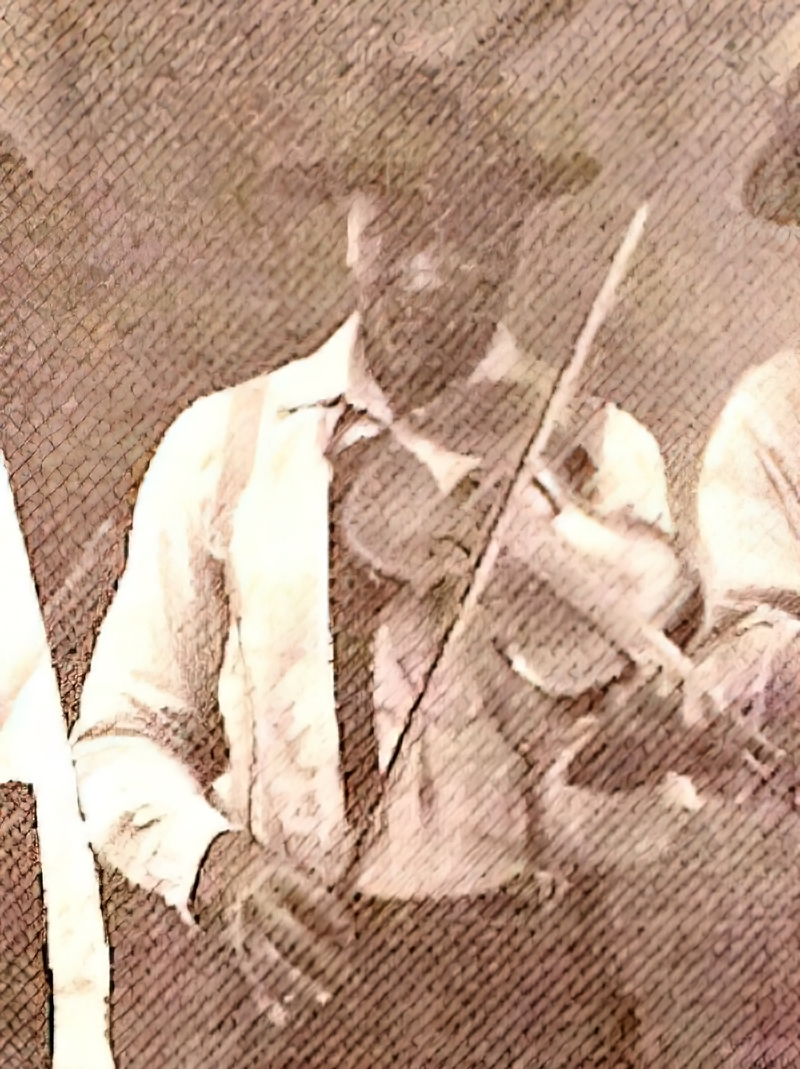
Arnold Shultz (Wikipedia, Fair use).

Another major influence was Arnold Shultz, an African American man, born in Ohio County into a family of traveling musicians. He gave Bill the chance to play his first paid musical job, with Shultz playing fiddle and Monroe playing guitar. Shultz developed a jazzy, thumb-style guitar picking method that evolved into a Kentucky style that was adapted by Merle Travis, Doc Watson and Chet Atkins. He died in 1931 and was inducted into the International Bluegrass Hall of fame last year (2025).
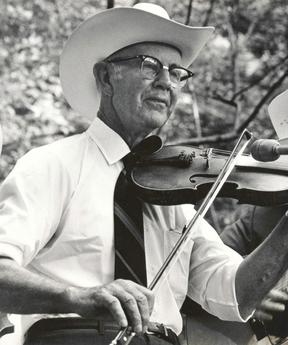
Birch Monroe at Bill Monroe’s Second Annual Kentucky Bluegrass Festival, Jackson, Kentucky, August 1972. Photo by Carl Fleischhauer, shared under the Creative Commons Attribution-Sharealike 4.0 license.

In 1929 Bill left his Uncle Pen’s cabin and headed to East Chicago, Indiana to work with his brothers at the Sinclair Oil Refinery, He worked there until 1934, mainly in the barrel house, washing and loading empty oil barrels. During that time, he continued playing music with his brothers and another musician, Larry Moore, at local venues and dances, as The Monroe Brothers. After a while, Birch and Moore left the group, and continued as a duo. They would go on to earn spots on several local radio stations, and then eventually nationwide. RCA Victor signed the Monroe Brothers to a recording contract in 1936. “What Would You Give in Exchange For Your Soul?” became their first hit single, and they went on to record some 60 tracks for Victor’s Bluebird label in the next couple of years.

The Monroe Brothers disbanded in 1938 and Charlie and Bill each went their own way. The following year Bill auditioned for The Grand Ole Opry and won a regular spot by singing Jimmie Rodgers’s “Mule Skinner Blues,” which he recorded in 1940 with his newly formed Blue Grass Boys. The addition of banjo player “Davis “Stringbean” Akeman, Lester Flatt and Earl Scruggs, along with others, over the next few years, helped create a sound which characterized Bluegrass music.

Over a long career, Bill Monroe became known as the “Father of Bluegrass.” A live album in 1989, celebrated his 50th year with the Grand Ole Opry.
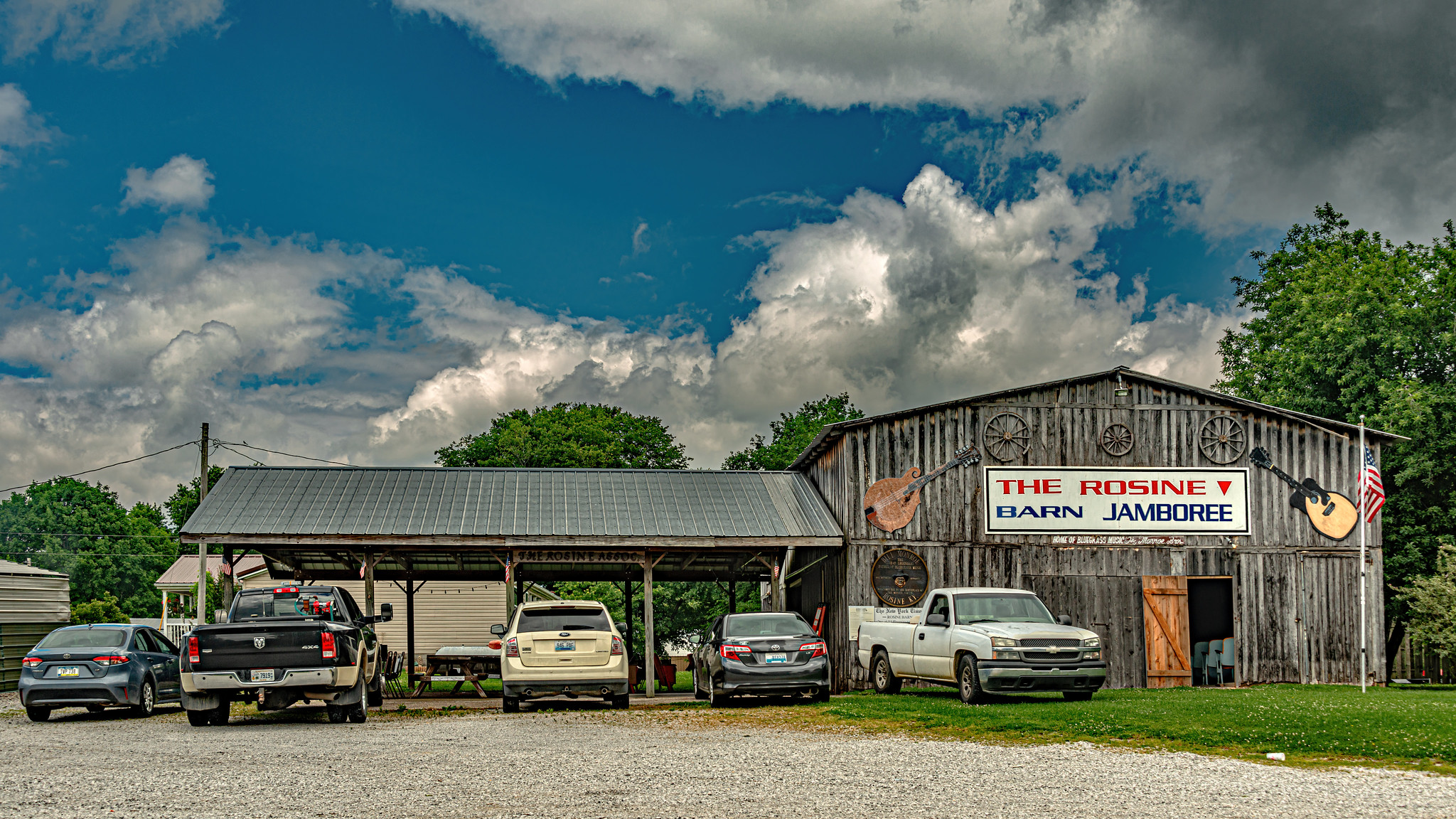
The Rosine Barn Jamboree, Rosine, Ohio County, KY. honors Bill Monroe and carries on his musical tradition! (Photo by Bob Bell/Driving Backroads)

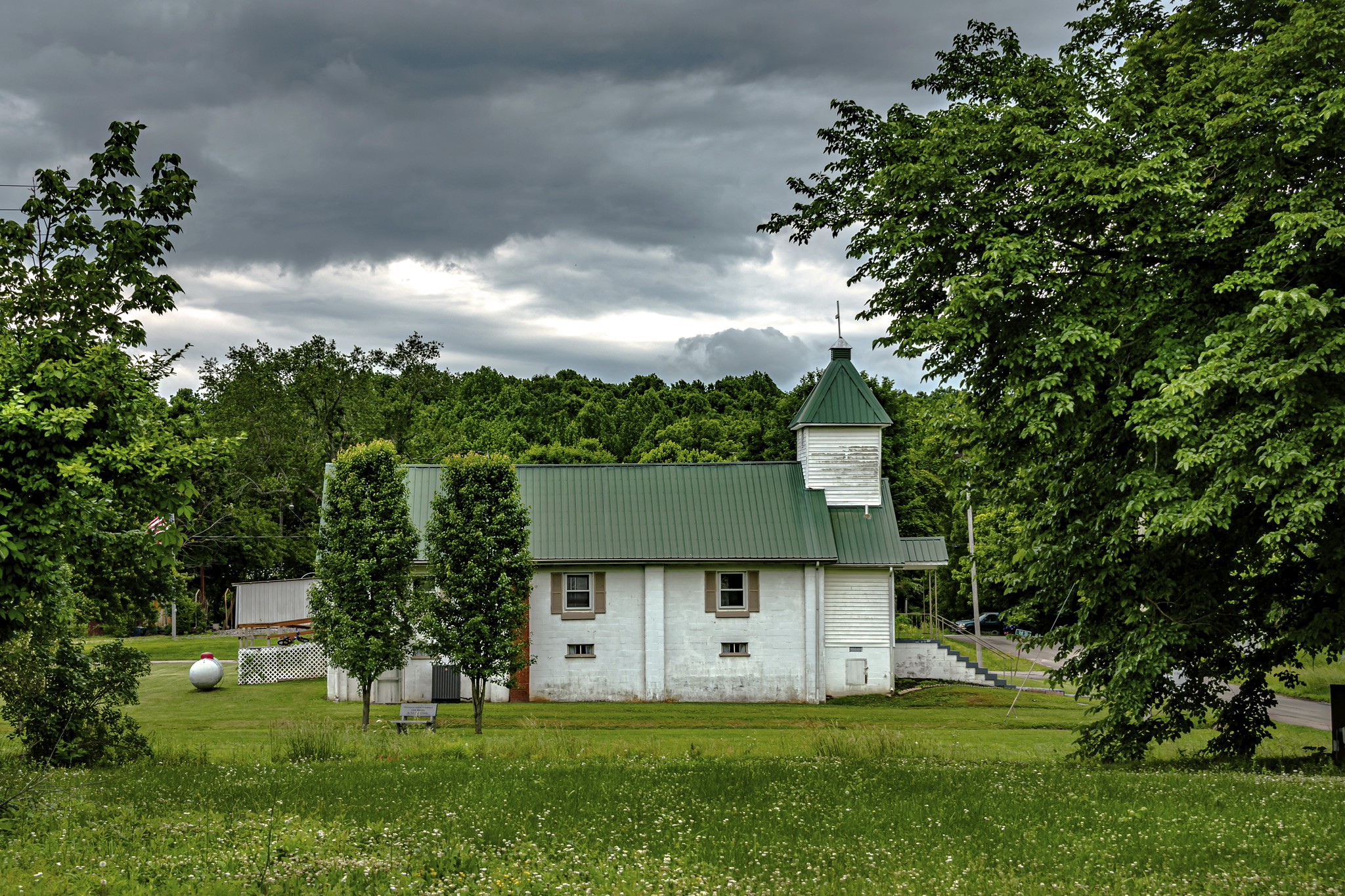
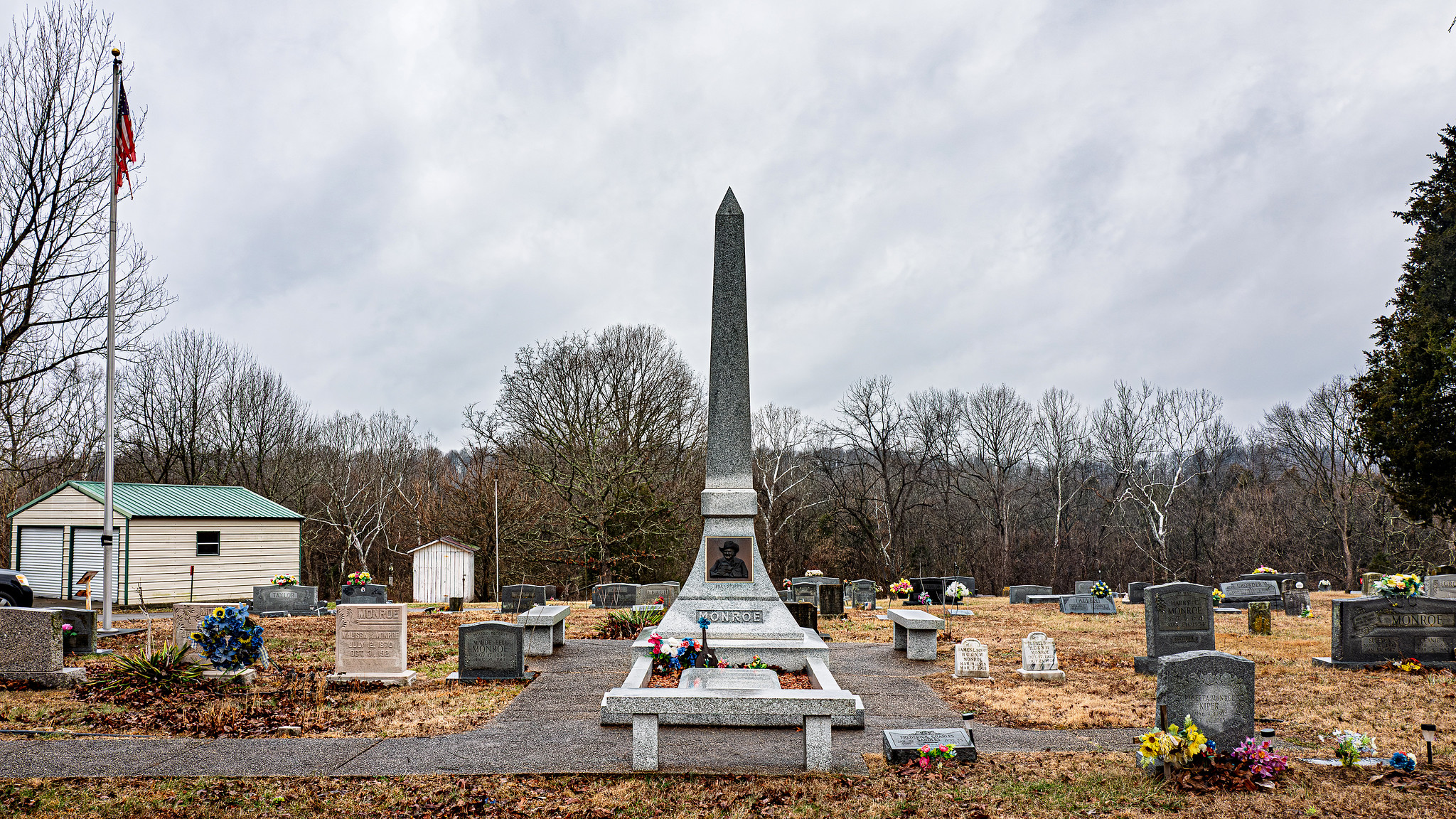
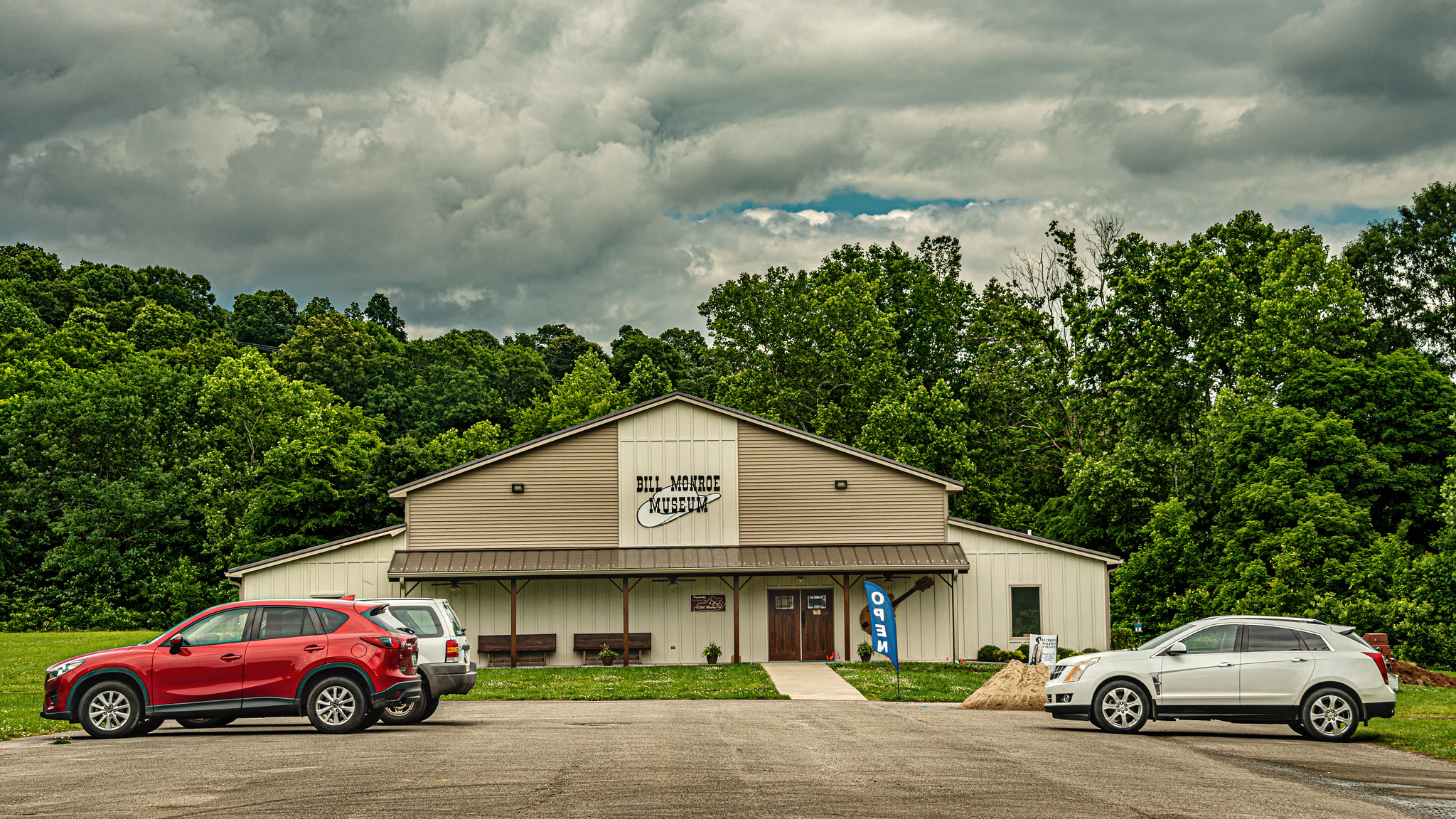
Ohio County and the Rosine community are visibly proud of their native son, who left a musical legacy and the Bluegrass genre to the world. There’s a lot more that could be said, but that would take a book. Rosine, the small town that Bill claimed as home, has a museum dedicated to him. There’s the Rosine Barn Jamboree, where musicians gather to carry on his tradition of country music, and the church where his funeral was held in 1996. He is buried in the Rosine Cemetery. The Monroe Homeplace was restored by the Bill Monroe Foundation in 2001 and is open to the public March through November. More information is available on the Bill Monroe Homeplace website.
Share Button
Posted in Backroads of Kentucky | Tagged , , , , , , , , | Leave a comment

Paradise Park: Muhlenberg County Heritage

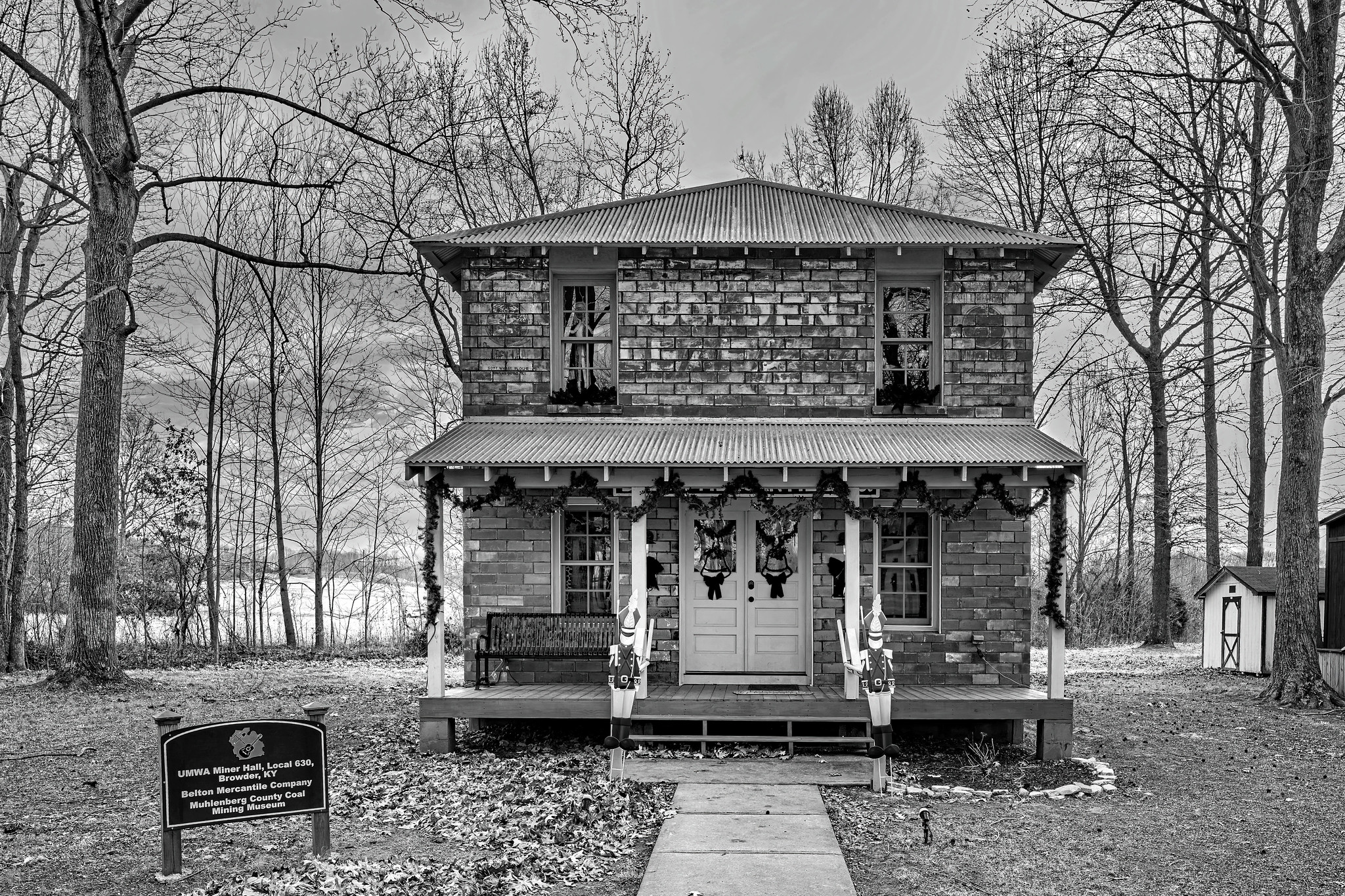
On a short weekend drive through Muhlenberg County, KY, we discovered Paradise Park, a community spot in Powderly, between Central City and Greenville. It’s an outdoor museum, recreating a coal mining town from the first half of the 20th century, a tribute to the area’s mining and music heritage.

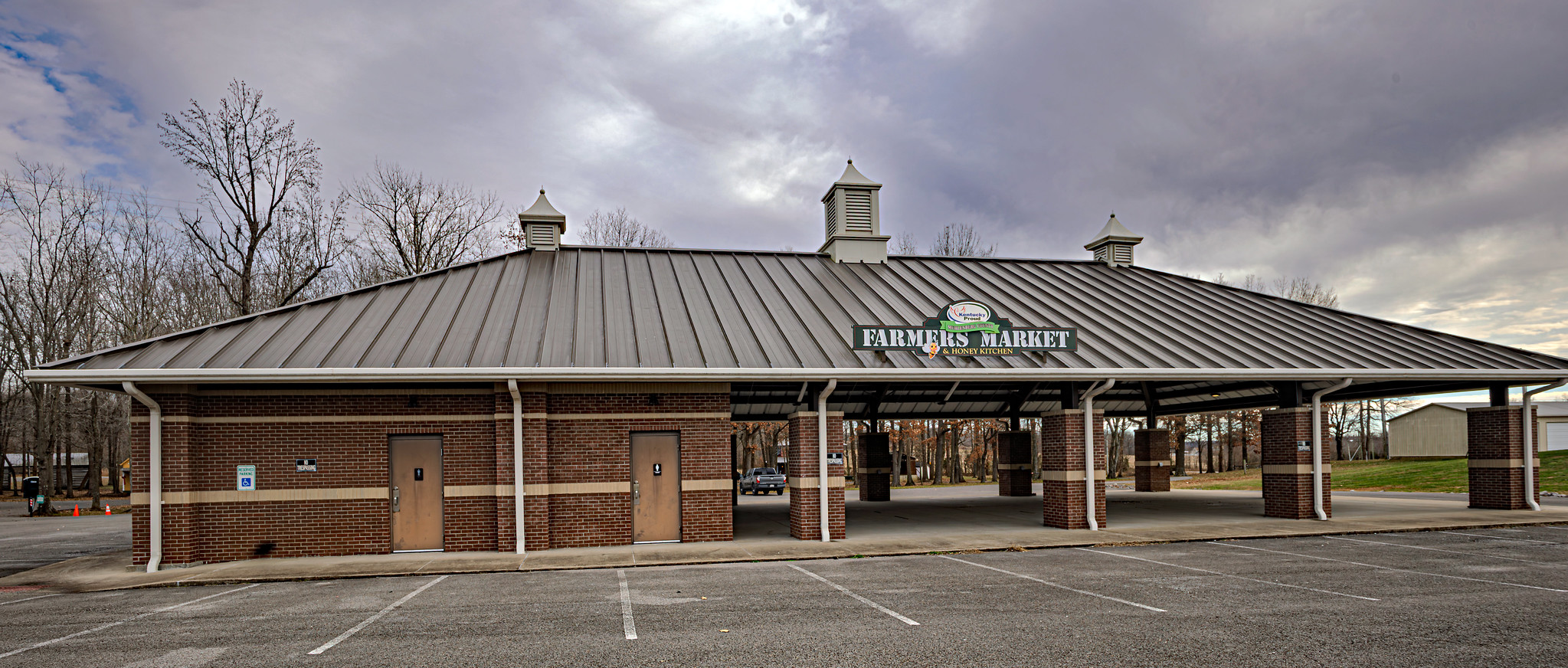
Farmers Market at Paradise Park

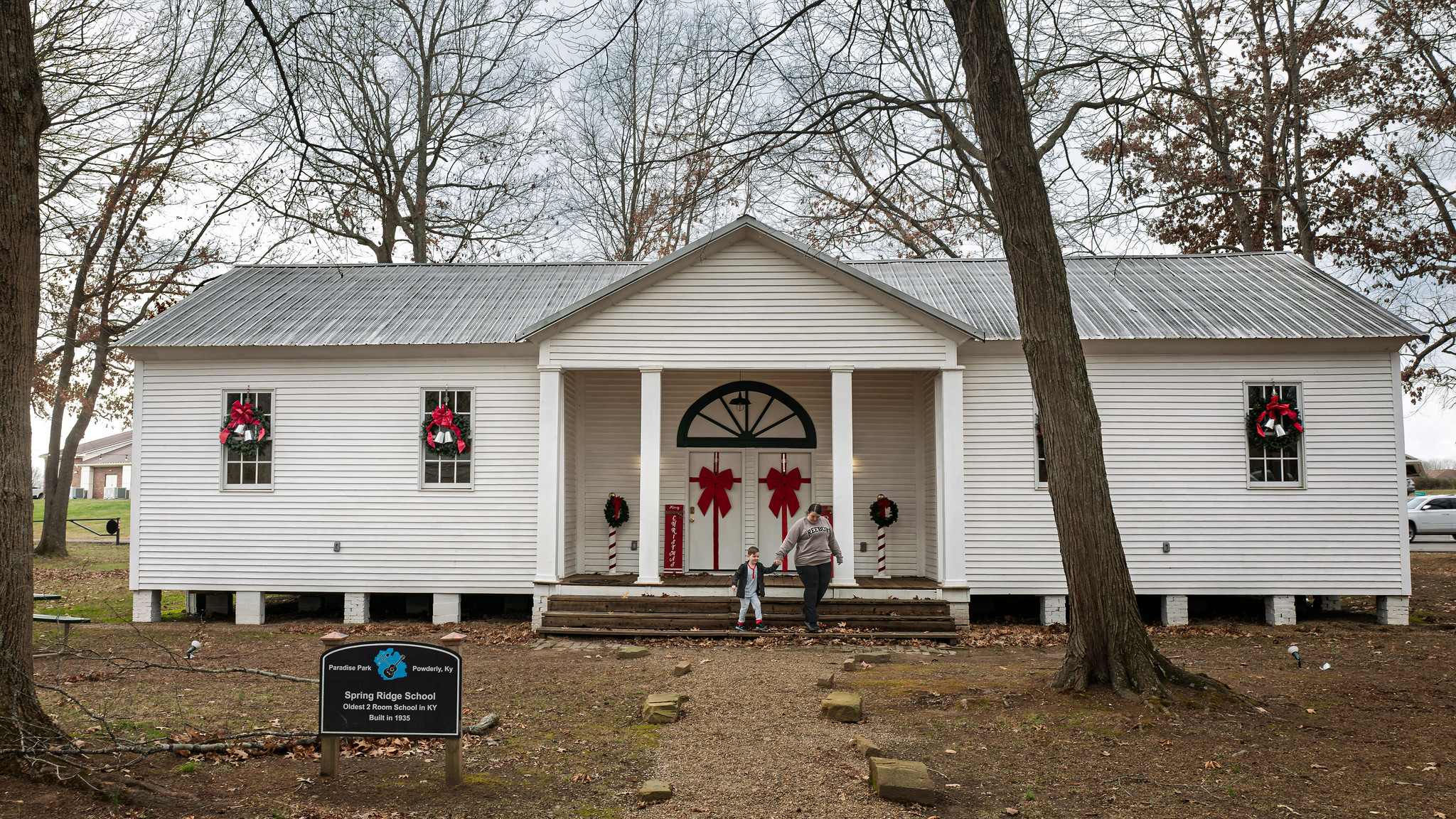
It was a chilly Sunday afternoon about a week before Christmas. In the center of the parking area is a farmers’ market, which the sign noted opens in April and is active through most of October. The skies were overcast, and there wasn’t a lot of activity, other than a few children and their parents milling into a restored schoolhouse to see Santa and Mrs. Claus. It was the Spring Ridge School, the oldest two-room schoolhouse in Kentucky, dating to 1935, and recently relocated to the park, where it was lovingly restored.

Spring Ridge School (1935), oldest two-room schoolhouse in Kentucky.

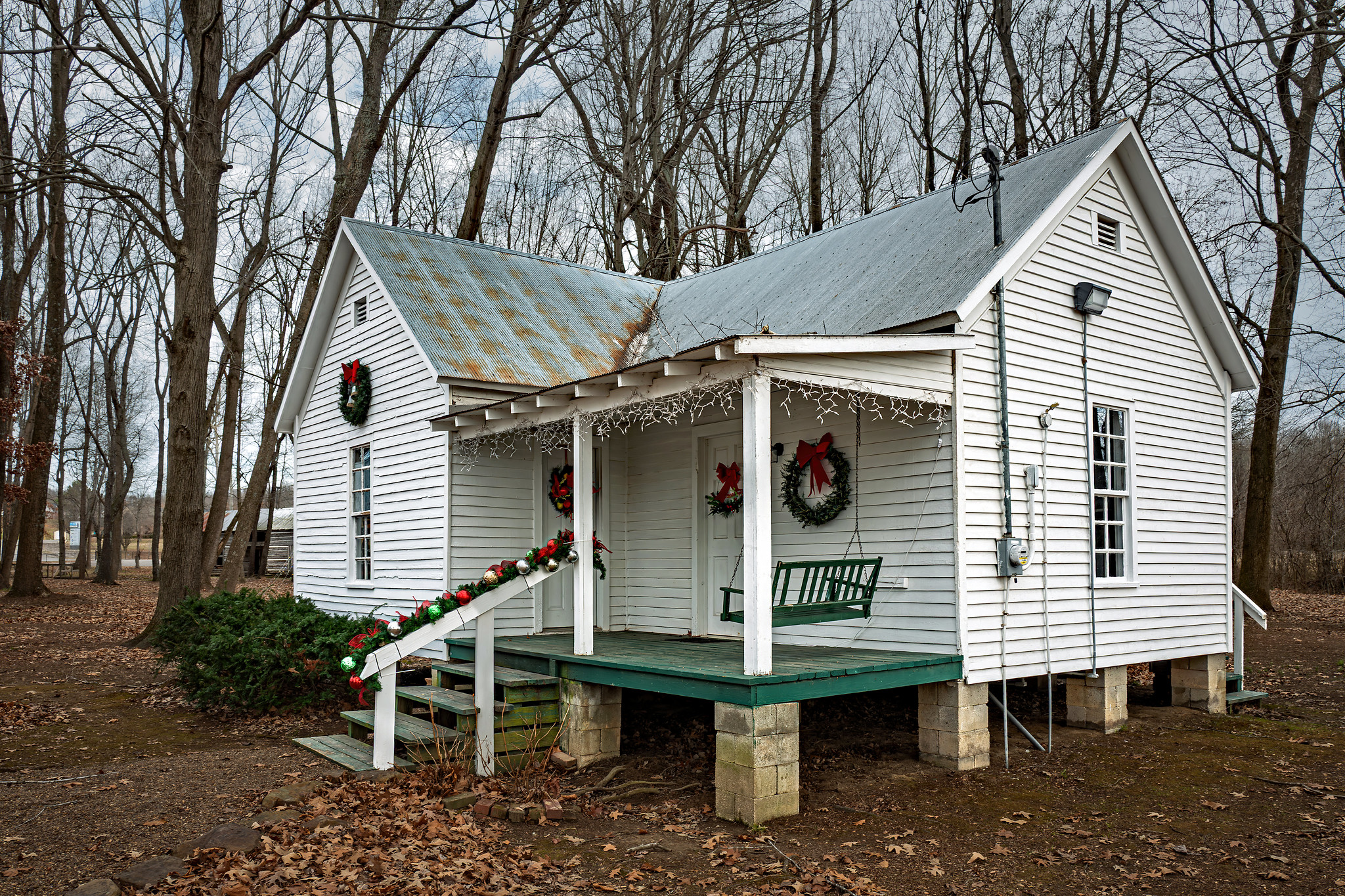
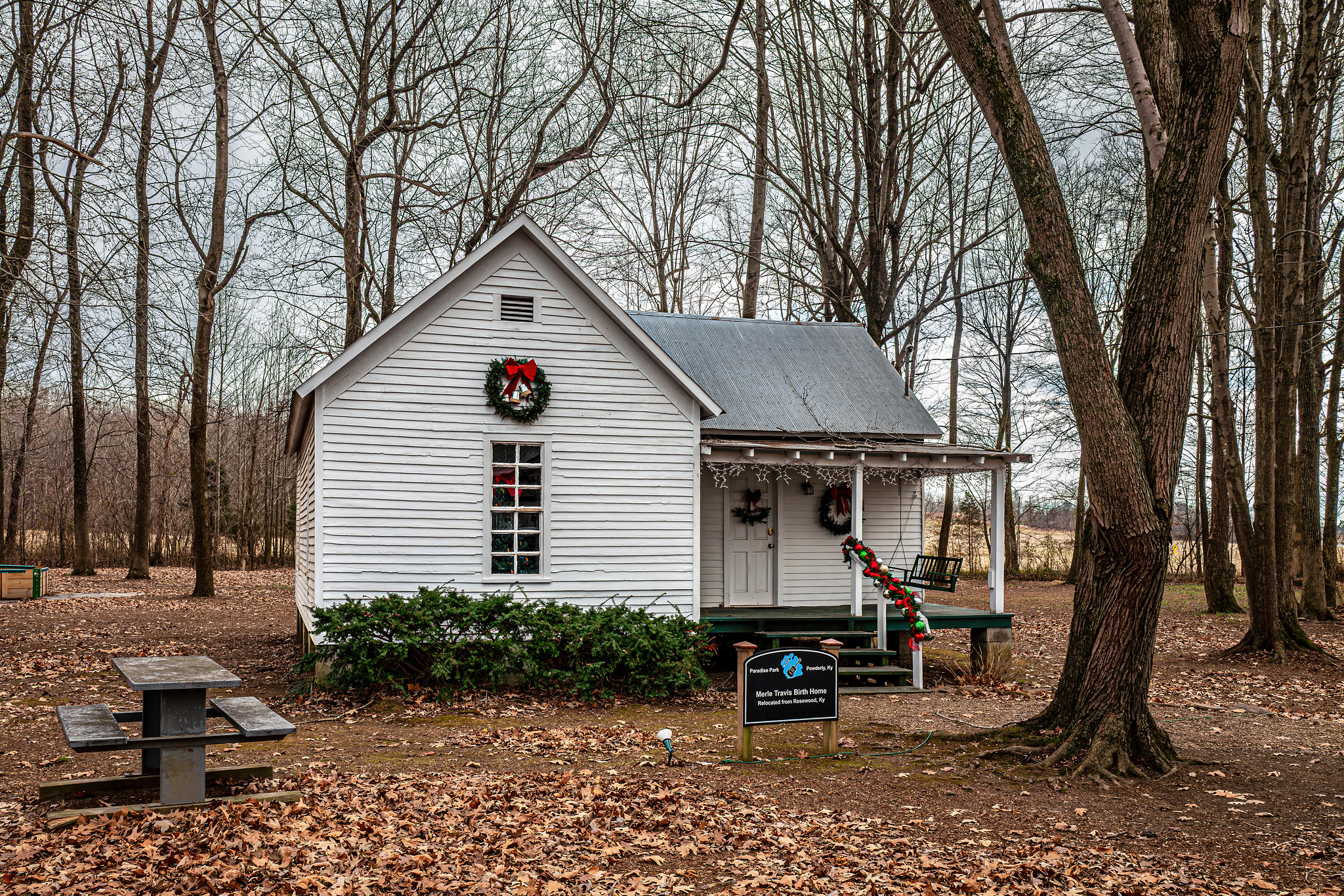
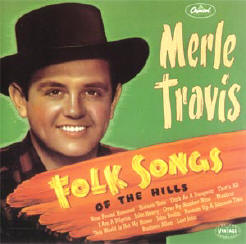
After we walked our dogs, Witney, Aubrey and Maddy, I got my camera bag out of the backseat and walked around the outdoor museum, which includes the boyhood home of country singer Merle Travis, which was relocated to the site from nearby Rosewood. I’m a long time fam of old country music, and recognized the name instantly. Travis may be best remembered for his classic song “Sixteen Tons,” about a coal miner, and life in and around the Rosewood coal mines. It was first released in 1947 by Capitol on Travis’s album “Folk Songs of the Hills.” The song became a gold record.

Merle Travis boyhood home (above and left)

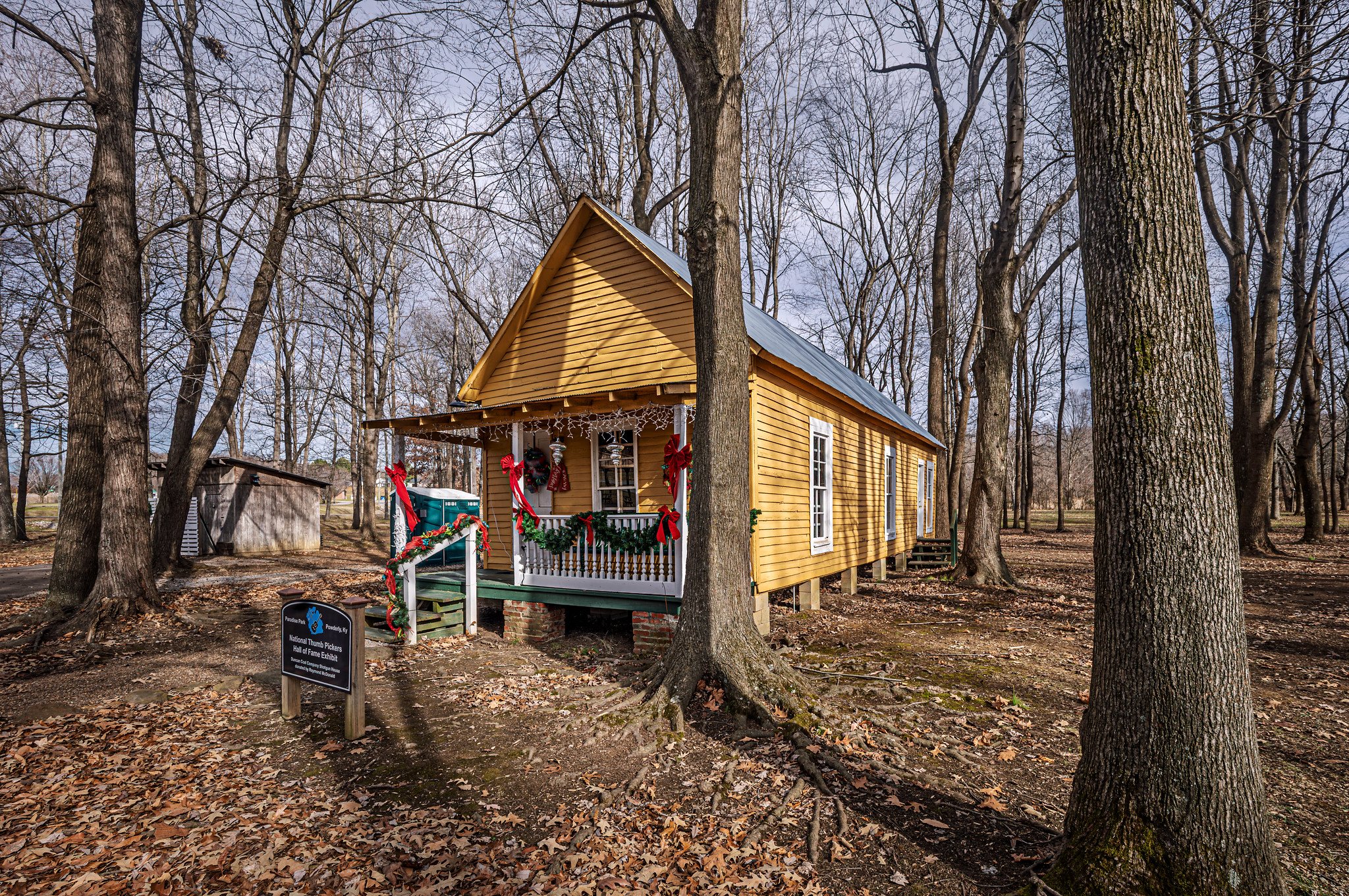
Travis’s boyhood home was a small, white frame house like many others still in use and lining the streets of small towns in Muhlenberg County. Another home relocated to the park is a shotgun home, so called because of it’s long and narrow build. A sign notes that it was A Duncan Mine home, which would have been rented to a miner and his family, typical of such operations. There would have been lines of these homes side by side to serve a workforce in a mining community.

Shotgun style home one owned by Duncan Coal Company.

It was a tough life for miners and there no way out for many, as the mine companies owned the homes and paid in their own scrip, which could be used only in their company stores, which offered staples and basic necessities, but little else. The United Mine Workers Union was eventually able to end the economic oppression and control. Company stores, mine owned housing and a scrip system of payment came to end, and working conditions, mine safety and collective bargaining became major concerns.

Merle Travis’s album Folk Songs of the Hills (Fair Use, Wikipedia).

“You load sixteen tons, what do you get?
Another day older and deeper in debt
Saint Peter, don’t you call me, ’cause I can’t go
I owe my soul to the company store”
(From Merle Travis’ song Sixteen Tons)

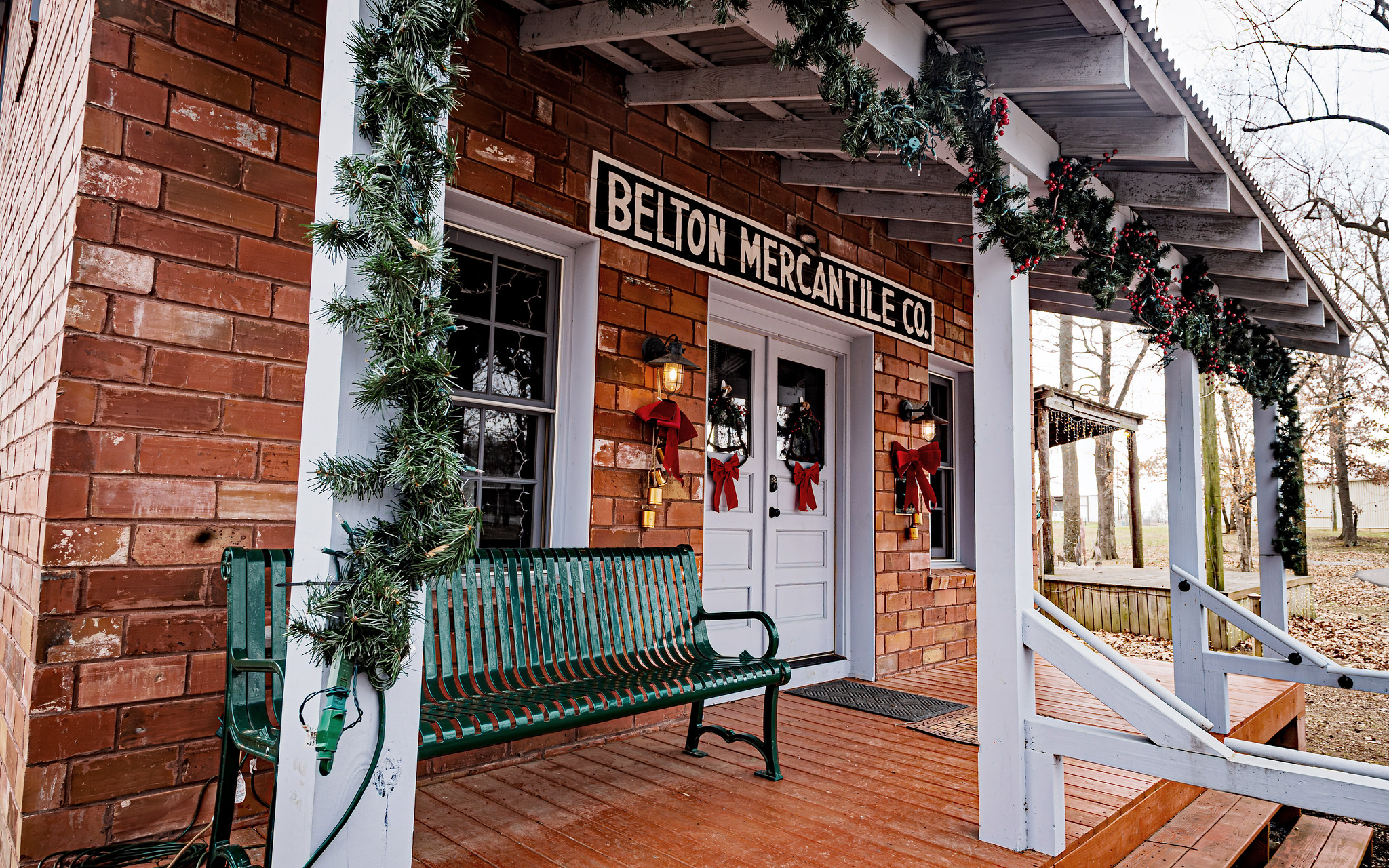
As I walked along the paved path, I came across the Belton Mercantile Company, obviously an old company store. Ghost ads painted on the front of the building, barely readable, advertised Golden Leaf Flour, a staple that would have come in 25 pound bags, and was produced in mills at Owensboro, KY.

A ghost ad painted on the old Belton Mercantile Company company store is barely readable.
Entrance to the old company store.

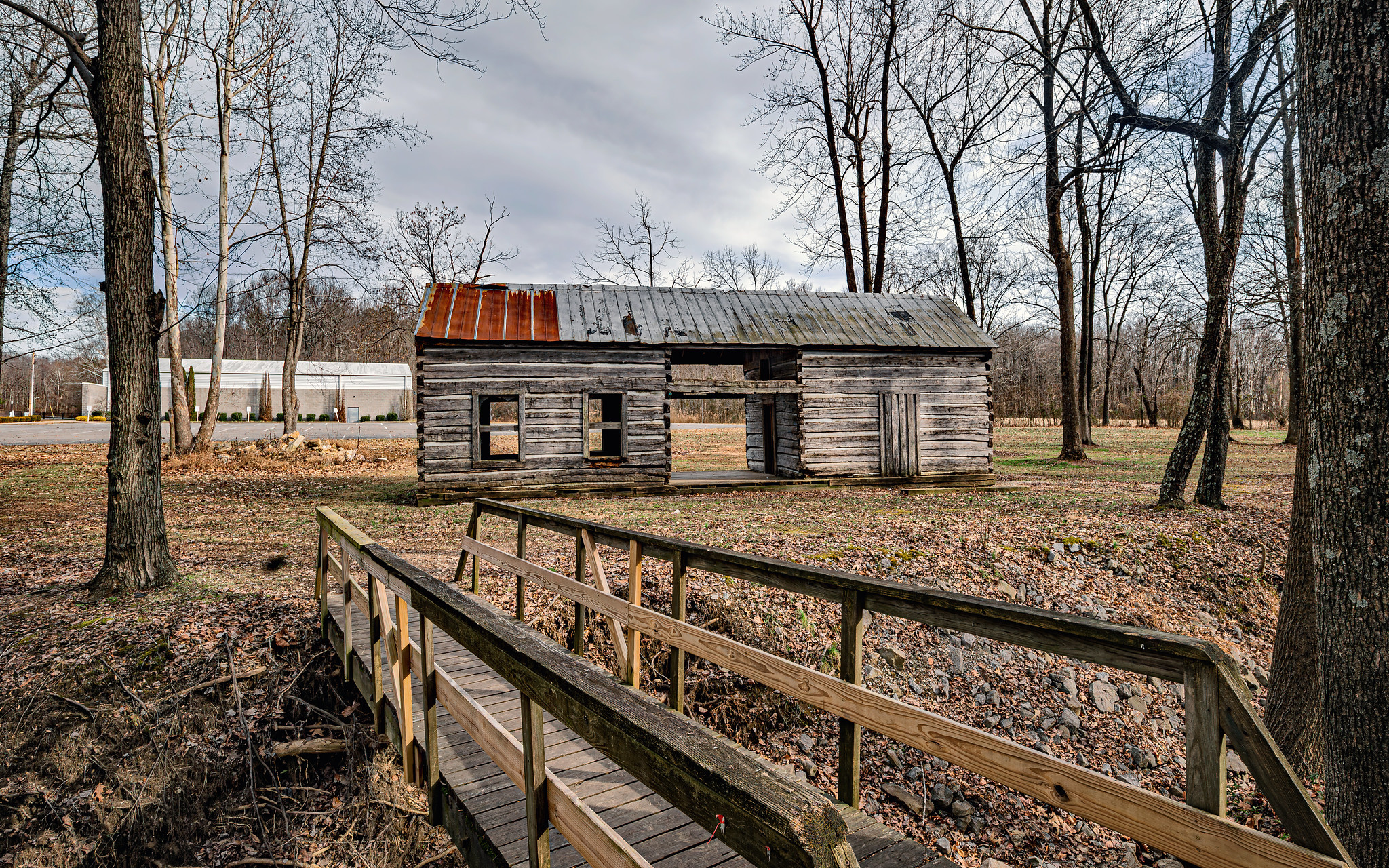
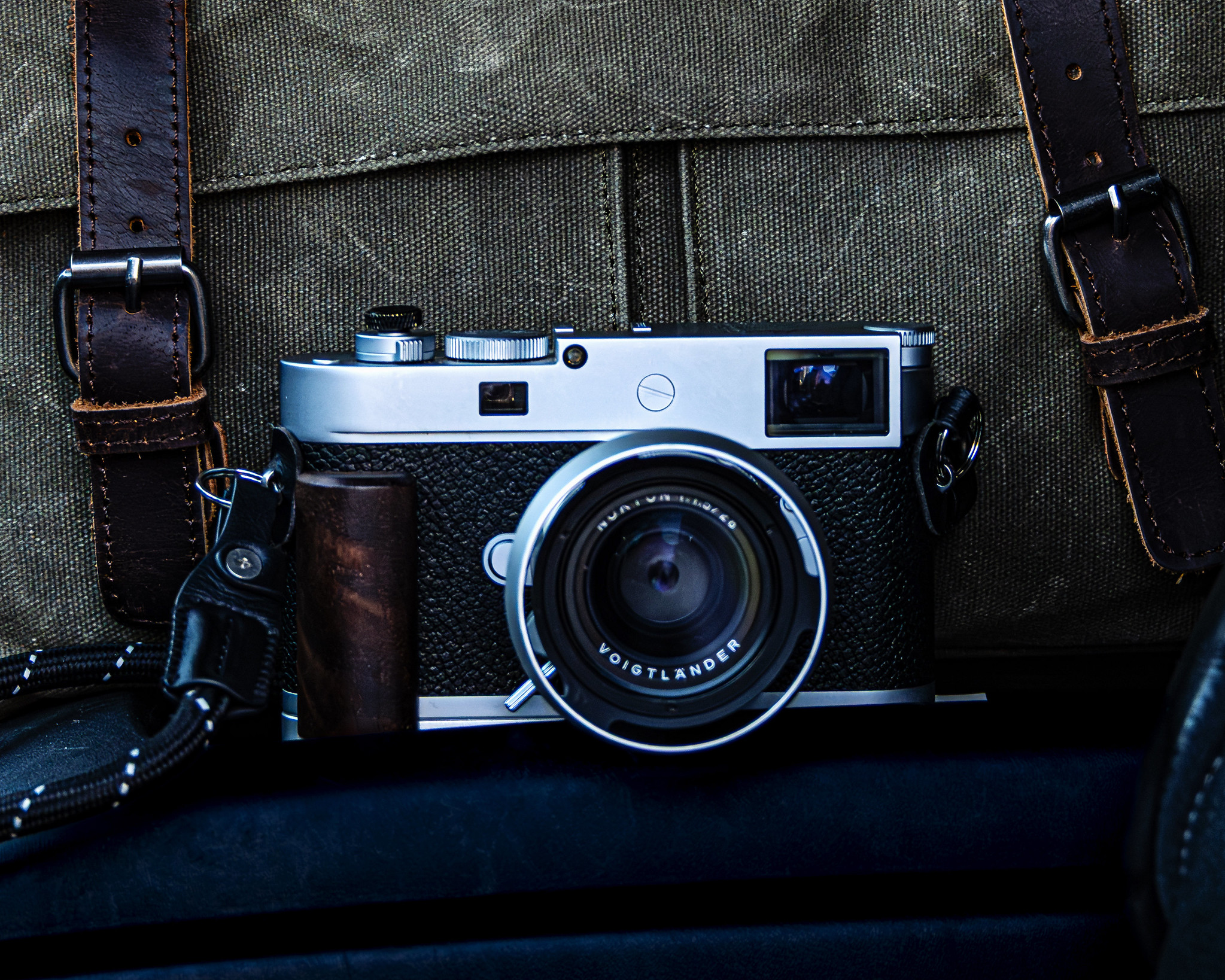
I ended my brief tour by walking across a wooden bridge to an old two room dogtrot log cabin, which remains unrestored. I put an ultrawide angle lens and external viewfinder on my digital rangefinder and snapped a few photos inside an out, and wandered back across the bridge and to the truck, shooting a nativity scene along the way.

Unrestored dogtrot log cabin at Paradise Park

I’ll be back this spring for the farmers’ market, and to shoot more photos of the outdoor museum when leaves fill the tree branches and provide shade along the narrow walkways. I wish more communities would develop historical themed parks like this one, which is both an educational experience and a tribute to the heritage of the county, with playgrounds for children, as well.

Share Button
Posted in Backroads of Kentucky | Tagged , , , , , , , , , , , , , , , , , , , , , | 3 Comments

Everyday Carry Camera

Do I have a camera in the truck with me when I go to the grocery, or to a work meeting, or maybe when I take the dog for a walk? You bet I do. It’s like the American Express card slogan. I don’t leave home without it.

My favorite everyday carry camera is a Leica M11-P with a fast 28mm Voigtlander Nokton lens.

I often go out on drives with photography in mind. My wife and I will load up the three dogs, Maddy (the Scottish terrier), Witney (the pug) and Aubrey (the French bulldog), and usually drive to a predetermined destination hoping to get photos of a historic home, church, or business, that I’ve heard about, or think will make a good photo. I’m likely to have two or three full-sized Nikon bodies and a variety of prime and zoom lenses in the car with me. I’ve got something for about any situation.

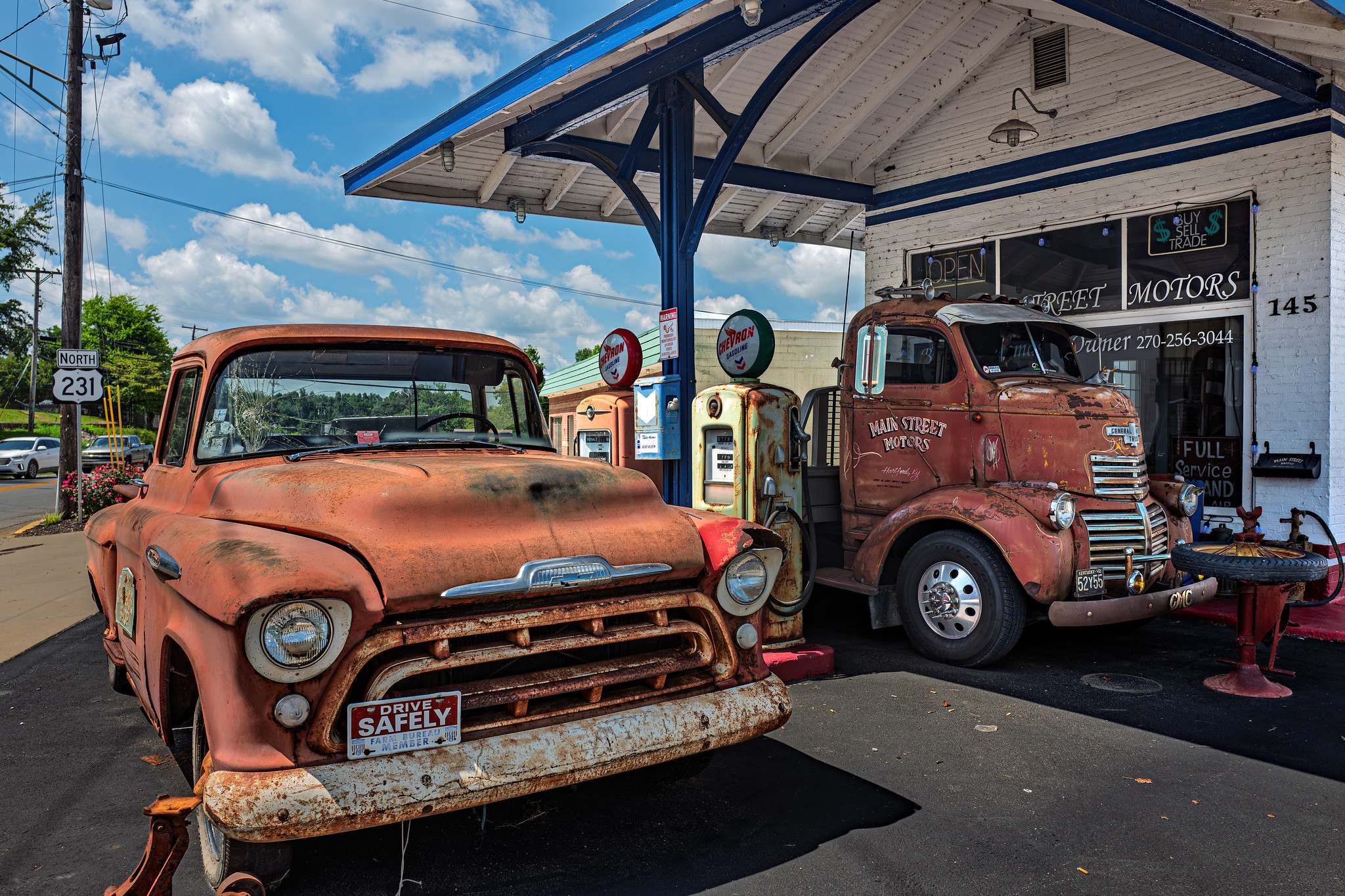
We were coming back from the veterinarian’s office in Hartford, Ohio County, KY, when I I found this subject.

But most of the time, when I leave the house, my focus is on the task at hand, whether it’s getting a few groceries, taking Witney to get her nails done, or a variety of other every day chores. I don’t want or need the photo arsenal. However, one never knows when a photo opportunity will present itself. So, I make sure I have one light and portable camera with me. My first choice is a full frame body with a 28mm lens or APS-C equivalent. That usually serves for about 90 percent of what I shoot, even when out on a planned photo jaunt. Rarely, I’ll pick up a DSLR body with a 28-300 zoom mounted on it.

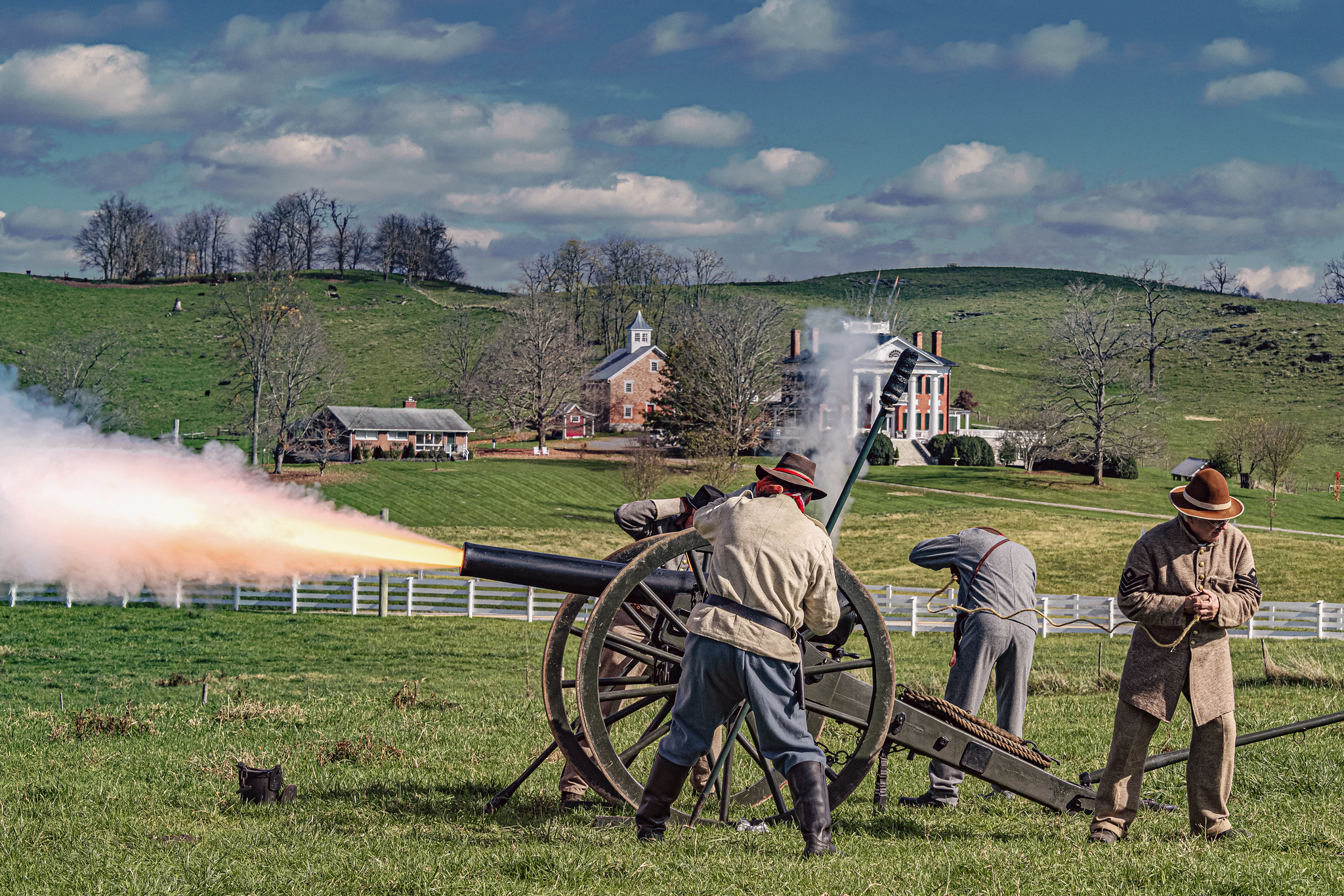
I was headed to the grocery in Union, Monroe County, WV, when I saw a sign for a social presented by the Sons of Confederate Veterans. They were demonstrating a civil war era cannon. I stayed for a while and shot this image.

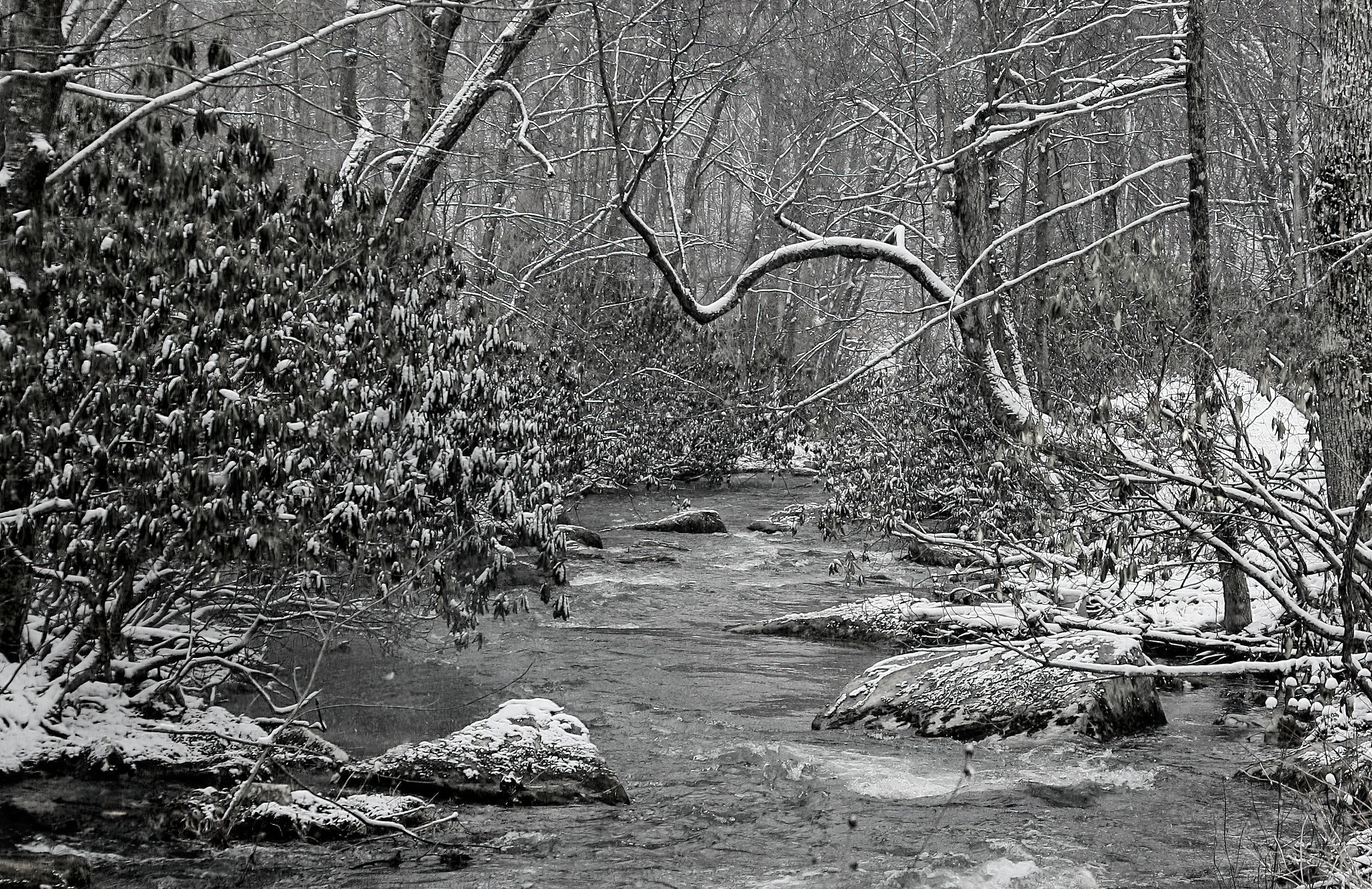
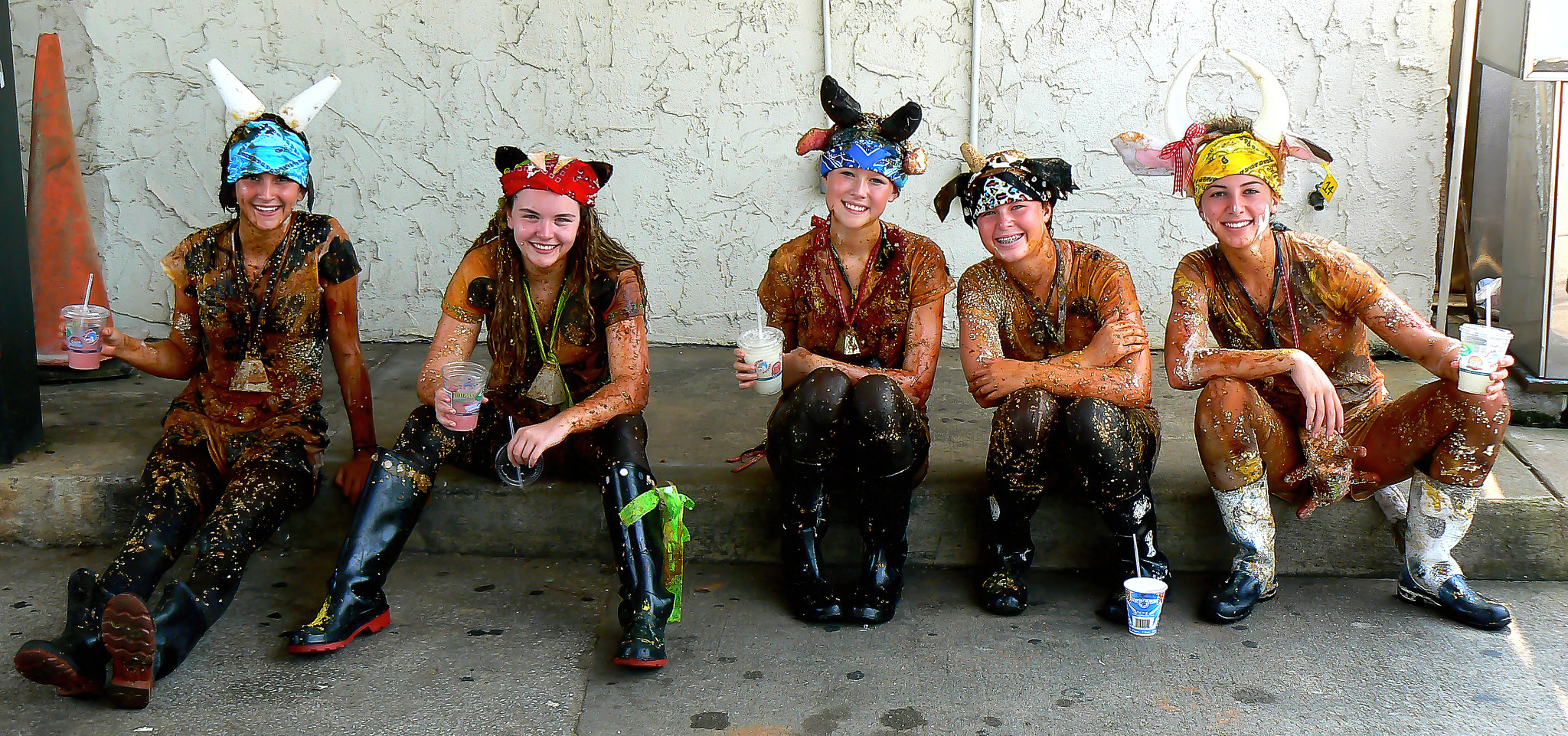
The photos here were all taken on days out when I really wasn’t expecting to take pictures, and was out for some other reason. Two of these are being featured in a National Geographic book, others have been in magazines and brochures, and one is in an art museum’s permanent collection. It pays to have an everyday carry camera.

Share Button
Posted in Backroads of Kentucky, Backroads of West Virginia, Photo Gear, Uncategorized | Tagged , , , , , , , , , | Leave a comment