Black and White for Back Road Photography

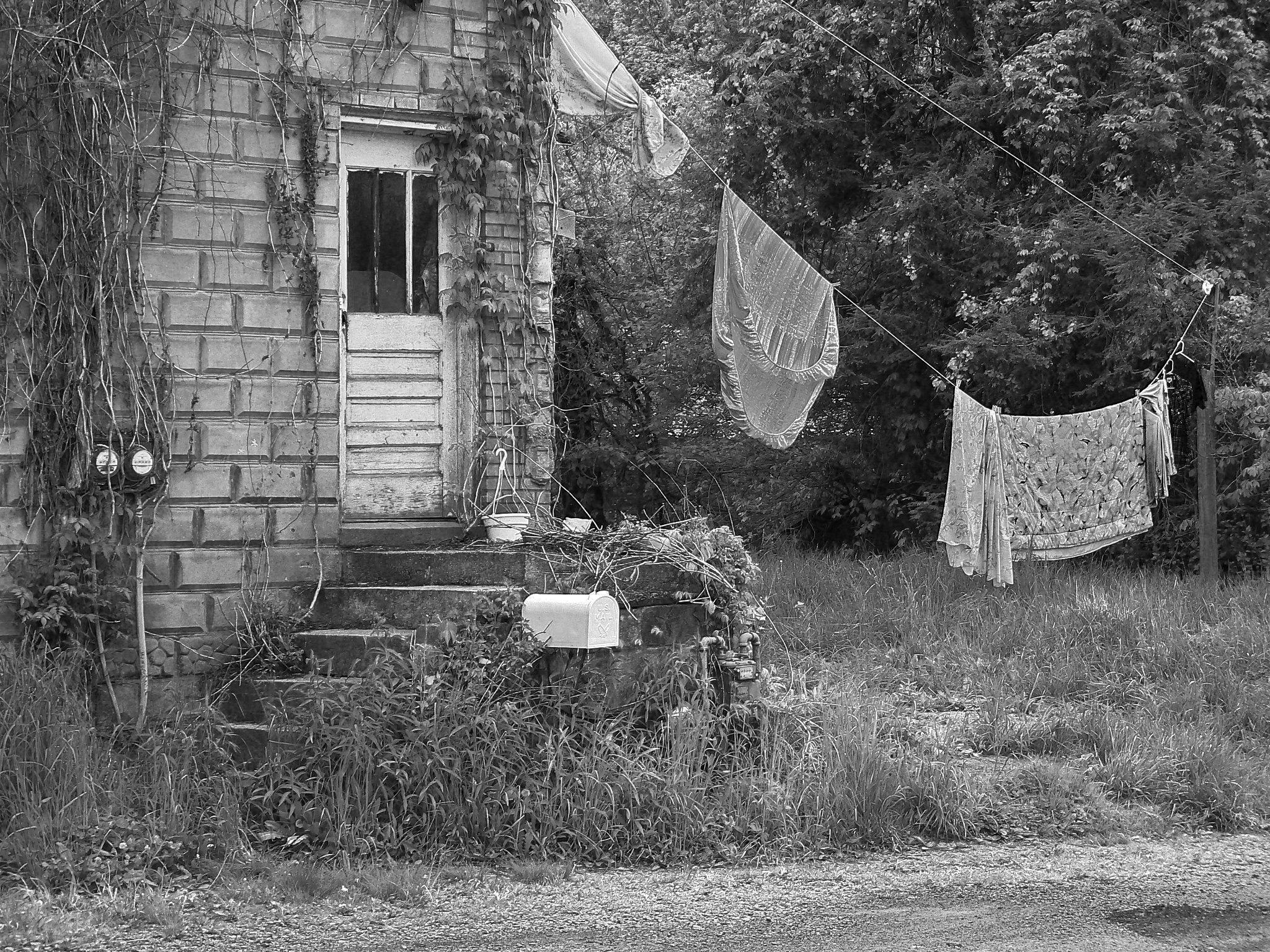
Clothes are hung out to dry at this rural West Virginia home. (Click on image for larger photo).
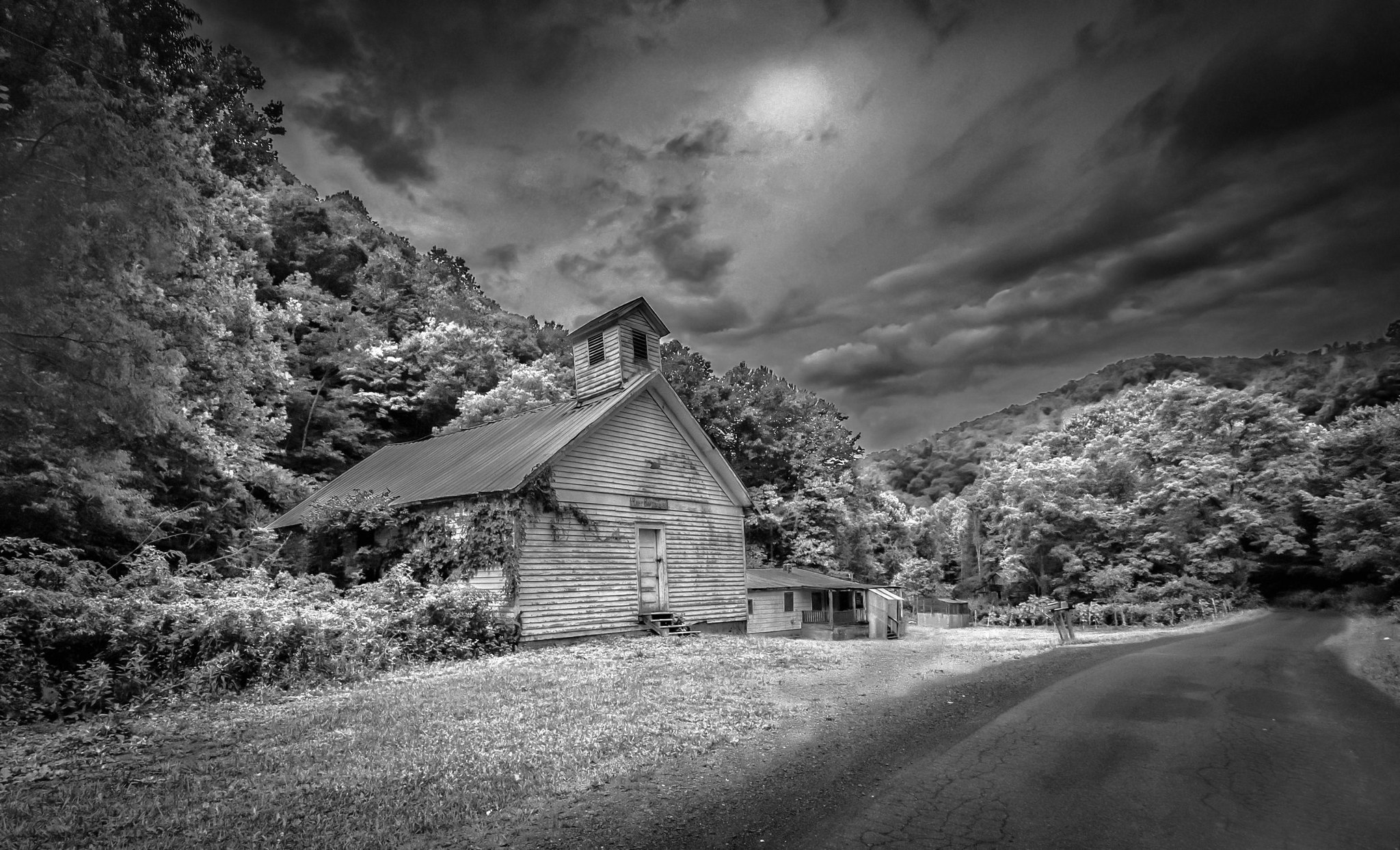
An old church, Ramp, Summers County, WV. (Click on image for larger photo).

I process most of my images in color, as that what seems to work for the type of photography that I do, mainly back road photos of old farmhouses, churches and the occasional historic structure. Fine art photographers will tell you that black and white images remove the distractions inherent with color, allowing the viewer to focus on the more important aspects like texture, highlights and shadows, contrast, shapes, and detail that can define a subject. I agree wholeheartedly, and love the black and white genre, and use it when appropriate.

A Monroe County, WV farm.(Click on image for larger photo).

When I shoot images with my digital cameras, I have a choice of recording the photo in color or monochrome. I almost always choose color, as the color information can be discarded in post processing, and a final monochrome image produced, giving me the choice of both. I still shoot film once in a while, and usually have a camera loaded with black and white film, especially when I’m going to be shooting subjects that lend themselves to it. A big advantage of black & white film over color, is that the negatives are easily processed at home with minimal equipment. The negatives can then be scanned and post processed digitally, if one so chooses.

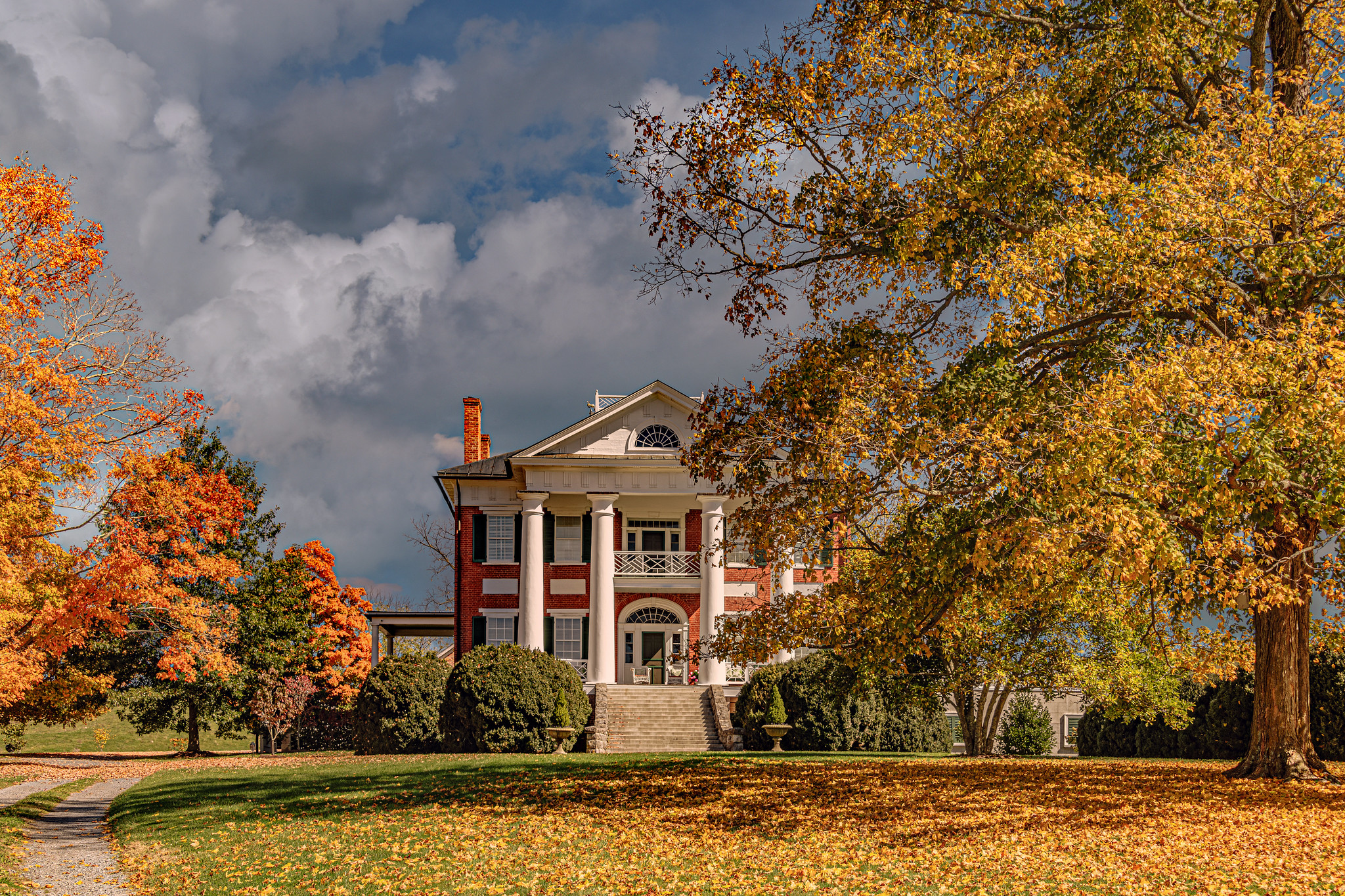
A Pittsylvania County, Virginia farm. (Click on image for larger photo).
A storm brewing in Hancock County, IL. (Click on image for larger photo).

A photographer learns to “see” in monochrome, and when shooting, exposes an image accordingly. I prefer black and white when deep shadows and contrast are present. While these may seem harsh in a color image, they can work well for monochrome. I like clouds in my images and choose to go out and shoot when the weather is cooperative. Generally, on those days, the light is flatter and color works well for me. With black and while film, color filters are sometimes needed to bring out the contrast in the sky so that clouds or other detail is emphasized.

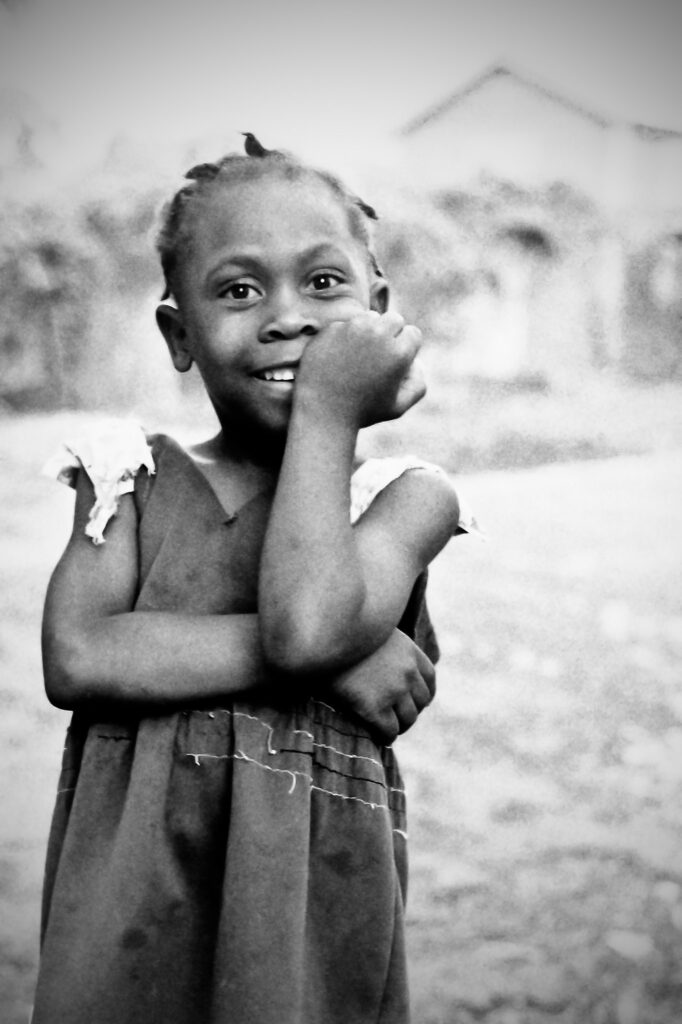
I particularly like portraits and candids of people in black & white. Here, in particular, color can be distracting. I’m a big fan of photographers like Dorthea Lange, who recorded photos of people and everyday life in the Great Depression, and Sebastião Salgado, a Brazilian photographers, who travels the world recording poverty and the human condition, as related to globalization. Other great black and white photographers that I admire include Robert Capa, Henri Cartier-Bresson, and Life Magazine photographer Larry Burrows (who was also a master of color).

Back road photography is different than documentary photography. It’s subjects don’t normally make the nightly news, and aren’t timely in the same sort of way. They are, however, just as important. The old farmhouse, or abandoned church that was once the center of activities for a farming community, may very well be gone in a few years. Images of the farms and barns, and plain country folk that we record today in photos will hopefully be around for future generations to appreciate, whether shot in black and white, or color.

Share Button
Posted in Backroads of Illinois, Backroads of Kentucky, Backroads of West Virginia | Tagged , , , , | 4 Comments

Photographing Barn Quilts

A very large quilt pattern on a Monroe County, WV barn. (Click on image for larger photo).

Anyone who has spent time drive rural back roads has seen quilt blocks painted on barns. They are quite common in parts of West Virginia, and most states have them. When I first started seeing them a few years ago, I had no idea as to what they represented. I had a camera in the truck and took pictures anyway.

Quilt barns can be found in Amish communities, too. (Click on image for larger photo).

A little research showed that the barn quilts date back to about 2001, when a lady named Donna Sue Groves, in Adams County, Ohio, got the idea of honoring her mother, Maxine, a noted quilter, with a painted quilt block pattern on the family barn. The idea caught on in the community, and a “quilt trail” was born. Other areas with proud heritages in quilting and rural life adopted the idea, and now there are quilt trails in at least 43 states, and three in Canada.

A quilt block design on a barn near Lindside, Monroe County, WV. (Click on image for larger photo).
A barn near Grassy Meadows, Greenbrier County, WV. (Click on image for larger photo).
A barn quilt near Greenville, Monroe County, WV. (Click on image for larger photo).

West Virginia has some of my favorites, and Monroe County has quite its share. The quilt blocks are often traditional designs that go back generations, and often hold special meaning to those who lovingly put them on the barns to share. Pr‌inted, as well as on-line resources can serve as guides for finding these treasures. They aren’t necessarily located conveniently on main roads, and are very often on back roads that most people will never drive without good reason.

The back road photographer doesn’t need a reason to drive these roads, other than the potential for finding a great subject to photograph. And, barn quilts serve this purpose well, whether found quite by accident, or on a planned venture.

Share Button
Posted in Backroads of West Virginia | Tagged , , , , , , , , | 2 Comments

Union, WV: A step back in time

Green Hill Cemetery dates back to the early days of Union, WV. (Click on image for larger photo).

A drive through Union, WV gives one clues that the small town is rich in history. It doesn’t take but a minute to get from one side of town to the other, as there’s no traffic lights or other hindrances. No fast food restaurants or big chain stores, either. However, you will find many homes, churches and businesses residing in antebellum structures from past glory days that survived the Civil War and the ravages of time.

Some 2,000 grave markers dot the hillside, from early, simple slabs roughly hewed out of local stone, to elaborate monuments of imported marble. Click on image for larger photo).

On a high point, at the east edge of town, is Green Hill Cemetery. It’s been there since the town’s early days, and overlooks the community and surrounding area. Some 2,000 grave markers dot the hillside, from early, simple slabs roughly hewed out of local stone, to elaborate monuments of imported marble.

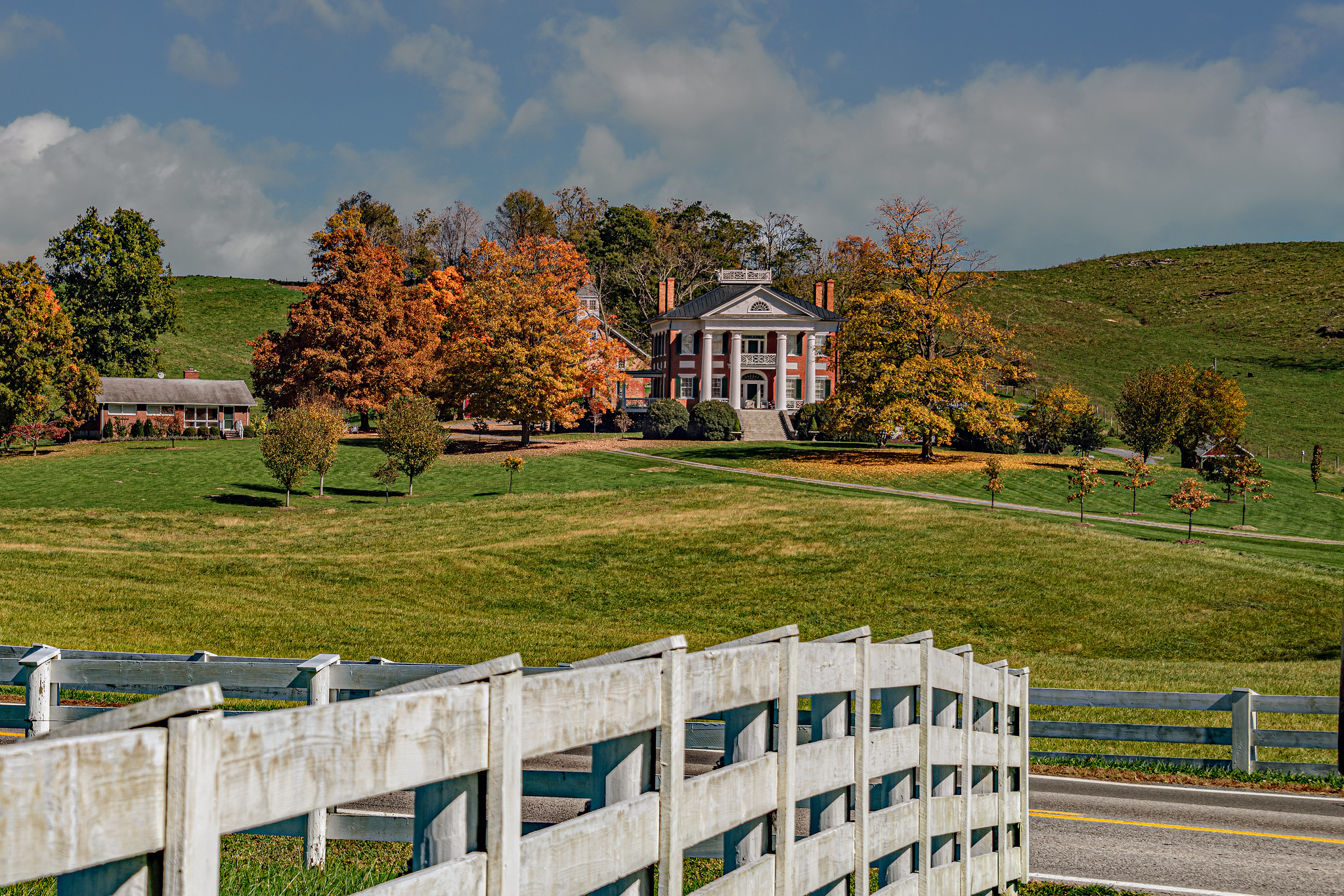
A look north from the cemetery reveals a farm with a large Greek Revival style home, known as Elmwood Estate. It was built by Hugh Caperton sometime during the 1830s. His son, Allen, the first Confederate elected to the U.S. Senate after the Civil War, also made it his home. In 1864, some 10,000 Union troops, under the command of Gen. George Crook occuppied Union for five days. They looted the estate, as well as others in the area, and took what they wanted, leaving the fine home in a state of near ruin. Today, Elmwood serves as a wedding and events venue.

Elmwood Estate was looted by Union soldiers during the Civil War. Click on image for larger photo).
Home of Confederate General John Echols. Click on image for larger photo).

The community had strong southern ties, and 13 confederate companies were formed in the county. Confederate General John Echols made his home just below the cemetery in another fine example of Greek Revival architecture. He practiced law there until the start of the war, when he was given command of the 27th Virginia Infantry, leading the regiment in the fighting at the First Battle of Manassas under Stonewall Jackson. A monument to Confederate soldiers was dedicated in 1901. It lies behind Union Presbyterian Church, which the current building was built in 1922.

Union has strong southern ties, The Confederate soldier memorial was dedicated in 1901. Click on image for larger photo).
Monument to Monroe County Confederate Soldiers. Click on image for larger photo).

The Monroe County Courthouse dates to 1881. It’s built in a Romanesque style, and still serves the community’s municipal needs. There’s a number of churches, some dating to before the Civil War. One, just a couple of miles to the east of Union is Rehoboth Methodist Church, the oldest surviving protestant house of worship west of the Allegheny Mountains.

The Monroe County Courthouse was built in a Romanesque style popular in the 1880s. Click on image for larger photo).
Rehoboth Methodist Church was built in 1786 about two miles east of Union, and is the oldest church in West Virginia. Click on image for larger photo).

For such a small town, population around 600, and county seat of Monroe County, there’s a lot to see. I would suggest that anyone interested in history, photography, or just a diversion, to get out and visit. Walk the streets, visit the shops, and stop for lunch at one of several small town eateries. For photographers, a wide-angle lens is a must, and you’ll also want the range of a telephoto. A day with puffy, white clouds can’t be beat.

Share Button
Posted in Backroads of West Virginia | 4 Comments